Showing posts with label Media. Show all posts
Showing posts with label Media. Show all posts
Friday, August 17, 2012
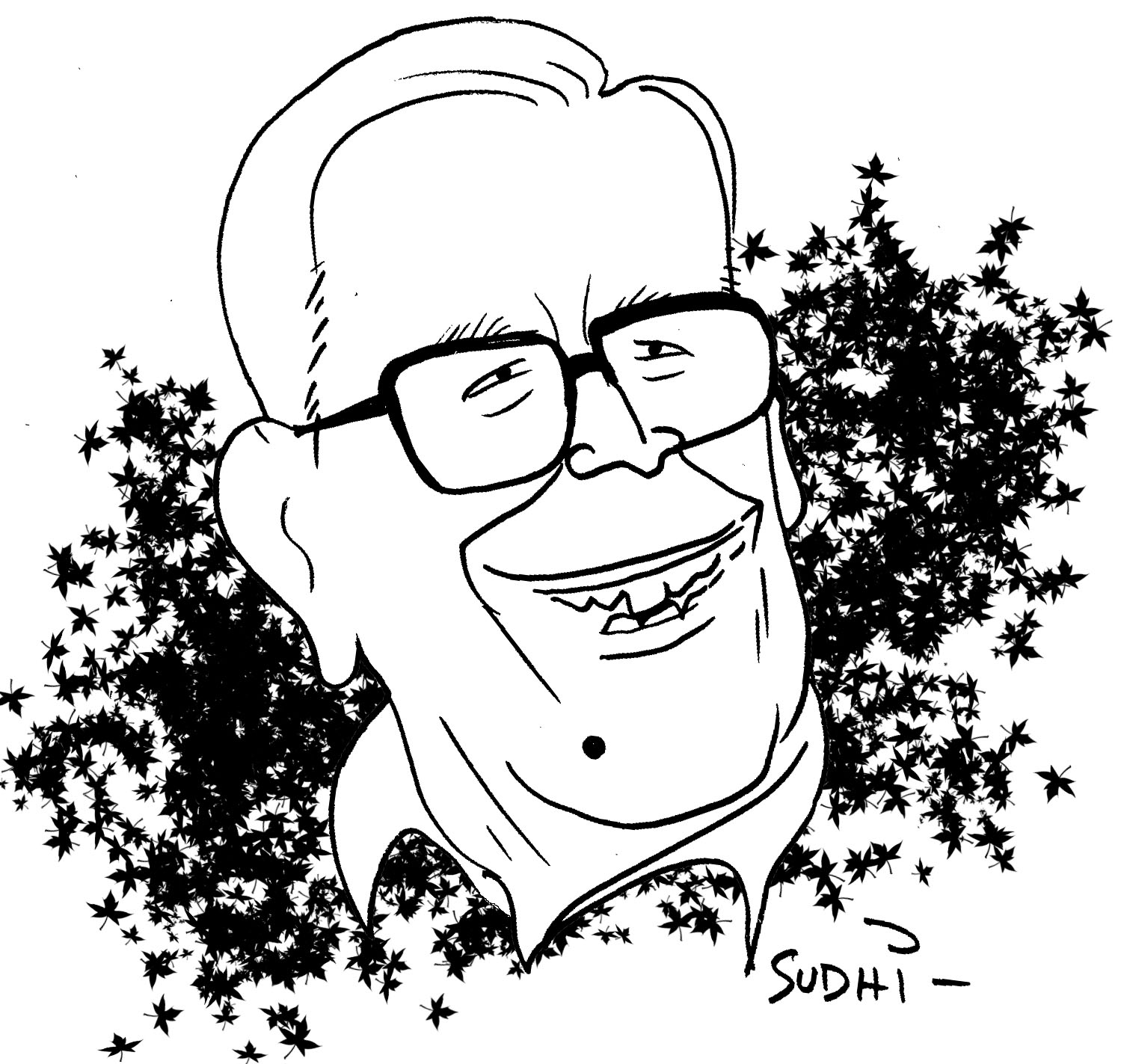
T Venugopalan: A Pioneer in Media Professionalism

Saturday, September 11, 2010
Media’s Selective Amnesia: The case of N M Siddique in Kerala
IT WAS on July 22 that my friend and one-time colleague N M Siddique was picked up by the police as he was going home in the evening. He was produced before the magistrate the next day, a Friday, around 8 pm and was remanded to judicial custody for 14 days.
Ever since he was incarcerated at the Ernakulam sub-jail, all his applications for bail being rejected till last week when the Kerala High Court ordered his release on bail on a series of stiff conditions. It was on September 2, Justice V Ramkumar of the High Court ordered bail for him, but curiously the order said he could be released only on September 13 as the investigations were still on.
Siddique, now a freelance media-person and a columnist for Thejas daily, was serving as the Ernakulam district president of the National Confederation of Human Rights Organizations (NCHRO), a national level human rights network headed by Justice Hosbet Suresh of Mumbai. He was charged under Sections 153 A, and 124 A of Indian Penal Code for his alleged activities creating communal tension and also for anti-national activities. The case is still pending and since the matter could be considered sub judice, I do not want go into the merits of the police charges. Let us hear it as and when the court is pleased to take it up.
But I cannot but shudder at the complete silence in the mainstream media in the matter of the arrest of a well known media-person, writer and a lawyer whose main mistake appears to have been filing a complaint with National Human Rights Commission over a series of raids and searches in various parts of Ernakulam district after the unfortunate incident of hand-chopping of a college teacher in Moovattupuzha. His complaint had alleged that these raids were often conducted in violation of the norms set by the higher courts for such actions and there were instances of police highhandedness and harassment in many cases. He had given a few specific cases as example for investigation by the NHRC.
Following this the NHRC did take some steps and had sent a notice to the Director General of Kerala police seeking their response. The matter is pending before the NHRC and in the meanwhile another search was conducted by the police at NCHRO office in Ernakulam north, which also became a matter of another complaint to NHRC by Mr Siddique as this operation was also violative of the norms and without any formal notice to him or any other office-bearer of the organization.
This is the background to the arrest which took place around 8 pm on July 22 and he was not even allowed to talk to his wife or any other friends or relatives as to what was happening to him. The news of arrest became known when somebody saw him in the police lock-up the next day and informed his friends and relatives. The police took him to the magistrate’s residence late evening and got his remand around 8 pm.
The police have charged him under serious sections of the IPC, for anti-national activities and creating communal tension, and the police report on the seizures at his office refer to a few copies of Thejas fortnightly, copies of his columns on human rights issues in Thejas daily and other publications, and a few CDs on Maradu and Gujarat carnage, etc, released by MRDF, an Ernakulam-based media research foundation.
What is surprising about the arrest and the more than six weeks of incarceration of a well known intellectual, writer and campaigner in Kerala, is the complete silence on the part of almost all the major regional media groups and their willingness not to question any of the police claims made in this case. This is really surprising even for a pliant and complicit media like Kerala’s regional press, because every time in the past when writers and intellectuals were put under arrest or subjected to state harassment, there have been voices raised in protest. Such protests were heard when P M Antony was subjected to harassment over his play on Christ, when a Surya T V reporter was arrested on a complaint from a Congress MLA, when an editor of a known yellow journal was arrested and his office searched, to cite a few examples...
But in the case of Siddique, no newspaper or T V channel made any effort to raise the normal questions that an independent media should have asked. What it points to seem to be a smug relationship between the media and the police in covering up the blatant incidents of rights violations when it comes to the members of the minority community. There are instances galore that prove this sad conclusion, and hence this conspiracy of silence in the case of Siddique is more than eloquent.
(A version of this note has been published at www.countermedia.in earlier this week.)
Ever since he was incarcerated at the Ernakulam sub-jail, all his applications for bail being rejected till last week when the Kerala High Court ordered his release on bail on a series of stiff conditions. It was on September 2, Justice V Ramkumar of the High Court ordered bail for him, but curiously the order said he could be released only on September 13 as the investigations were still on.
Siddique, now a freelance media-person and a columnist for Thejas daily, was serving as the Ernakulam district president of the National Confederation of Human Rights Organizations (NCHRO), a national level human rights network headed by Justice Hosbet Suresh of Mumbai. He was charged under Sections 153 A, and 124 A of Indian Penal Code for his alleged activities creating communal tension and also for anti-national activities. The case is still pending and since the matter could be considered sub judice, I do not want go into the merits of the police charges. Let us hear it as and when the court is pleased to take it up.
But I cannot but shudder at the complete silence in the mainstream media in the matter of the arrest of a well known media-person, writer and a lawyer whose main mistake appears to have been filing a complaint with National Human Rights Commission over a series of raids and searches in various parts of Ernakulam district after the unfortunate incident of hand-chopping of a college teacher in Moovattupuzha. His complaint had alleged that these raids were often conducted in violation of the norms set by the higher courts for such actions and there were instances of police highhandedness and harassment in many cases. He had given a few specific cases as example for investigation by the NHRC.
Following this the NHRC did take some steps and had sent a notice to the Director General of Kerala police seeking their response. The matter is pending before the NHRC and in the meanwhile another search was conducted by the police at NCHRO office in Ernakulam north, which also became a matter of another complaint to NHRC by Mr Siddique as this operation was also violative of the norms and without any formal notice to him or any other office-bearer of the organization.
This is the background to the arrest which took place around 8 pm on July 22 and he was not even allowed to talk to his wife or any other friends or relatives as to what was happening to him. The news of arrest became known when somebody saw him in the police lock-up the next day and informed his friends and relatives. The police took him to the magistrate’s residence late evening and got his remand around 8 pm.
The police have charged him under serious sections of the IPC, for anti-national activities and creating communal tension, and the police report on the seizures at his office refer to a few copies of Thejas fortnightly, copies of his columns on human rights issues in Thejas daily and other publications, and a few CDs on Maradu and Gujarat carnage, etc, released by MRDF, an Ernakulam-based media research foundation.
What is surprising about the arrest and the more than six weeks of incarceration of a well known intellectual, writer and campaigner in Kerala, is the complete silence on the part of almost all the major regional media groups and their willingness not to question any of the police claims made in this case. This is really surprising even for a pliant and complicit media like Kerala’s regional press, because every time in the past when writers and intellectuals were put under arrest or subjected to state harassment, there have been voices raised in protest. Such protests were heard when P M Antony was subjected to harassment over his play on Christ, when a Surya T V reporter was arrested on a complaint from a Congress MLA, when an editor of a known yellow journal was arrested and his office searched, to cite a few examples...
But in the case of Siddique, no newspaper or T V channel made any effort to raise the normal questions that an independent media should have asked. What it points to seem to be a smug relationship between the media and the police in covering up the blatant incidents of rights violations when it comes to the members of the minority community. There are instances galore that prove this sad conclusion, and hence this conspiracy of silence in the case of Siddique is more than eloquent.
(A version of this note has been published at www.countermedia.in earlier this week.)
Monday, April 19, 2010
Looming Violence, Political Threats and a Dispirited Media: On the Media Scene in Kerala
THERE ARE strident calls upon the media to make amends for its omissions and commissions, its pervasive intrusions into the privacy of individuals and the havoc it has wrought in the lives of many unfortunate victims. As a media person, I have always been extremely worried about these tendencies on the part of the media and have expressed my views that the media should introspect, and try be a responsible player in our democratic polity.
But the media, at the same time, cannot remain a toothless entity. It has necessarily to be aggressive, it has to gate-crash into domains that are closed to public review, and bring an objective view of things and developments to the public.
This is a tricky situation. How to strike a fine balance between the concerns of the public's right to information and the individual's right to privacy? Who is a private individual and who is a public person? How to define them and how to strike this nuanced position while reporting on them and their activities? And what constitutes private activity and public activity and where does the line of private activity of a public person and public activity of a private person merges or demarcates?
For almost a quarter century I have agonized over these questions and recently when I saw these clamours for public apology from our media to an American academic for some reports against him, I was thinking about these things again.
Here let me say that I am taking up the case of Dr Richard Franke only as a case study and I do not in anyway wish to express an opinion on his personal or academic activity. I presume that he is a well-meaning academic genuinely interested in Kerala and its people and all the past calumny against him, enumerated in the recent book by Dr Thomas Isaac and Mr N P Chandrasekharan and known to us Malayalis through various news media in the past few years, are simply baseless and the figment of the imagination of a politically motivated media.
Now a few questions arise. I will take up only two right now. First, how far the demands for an apology are legitimate; and two, whether there is any substance to the charge that the reports in media against Dr Franke proved to be an infringement on academic freedom?
This plethora of media campaign against Dr Franke was launched by Patom magazine of Mr Sudheesh, which was later taken up by many other Malayalam newspapers and other publications. The motivated nature of these campaigns was self evident, and most readers remained un-persuaded by most of these charges levelled against Dr Franke, Dr Isaac and a few others. It was a political shadow-boxing within the CPM, to which most of those involved in this battle actually belonged.
That means, the entire episode was part of our contemporary political life in the past few years. All the players were public persons and most of them were in the game for gains of a political nature and are endowed with political power in various ways.
Still, they make a camouflage attack on the media as if there was an infringement on media ethics. Indeed there was twisting of media ethics because the media often failed to check the authority of news items fed to them, but that in no way could be a case for seeking an apology from the media or the launch of an Inquisition from politicians. If anyone had been injured in such a scenario, it was the media itself because they suffered in their credibility, but here again there is no way a media organization can cross check such items fed to them because the Communist parties work behind iron curtains. They will not respond to media inquiries, but they still expect the media to play by rules. That is a very funny idea about democratic ways of functioning, indeed. A similar example could be when someone say, "head I win, tail you lose...!"
The second aspect that needs probing is whether there is any infringement on academic freedom. Dr Franke appears to be a US academic with some long- term connections with Kerala and has done some serious works here. He has been generally enthusiastic about Kerala and its development models though many may have differences with his points of view.
The charge is that his explanations were not given its due and that the campaign had been continued without any hitch even after such an explanation was offered. But why did Dr Franke become an object of attack? Was it because he was from US or was it because he was inadvertently (or perhaps even deliberately) involved in the CPM inner struggles?
The fact of the matter is that Dr Fanke became a target not because he was an academic or he was from US, but because he was seen to be taking a big role behind the curtains; being close to leaders in one faction in CPM and was also seen to be working with them on certain areas of serious concern to Kerala society and politics. When you are in politics, you are bound to receive attacks. Here, you see nothing academic, but everything is political. And in a political society, if anyone wants to exempt themselves from public criticism, why not take a leave and go back to your ivory towers, gentlemen? Why blame media in an injured tone when you confront your own battered pubic image?
When I launched this series of thoughts on the need for critical engagement on the part of media, I was aware of the severe accusations launched by this book.
But now that even a normally sober Sajan joins the brigade of critics, I must respond. I know Sajan himself had some part to play in it because he was among those experts who had read the text before it was published. Hence when I go ahead with my comments I hope Sajan would not get hurt, like the good comrade Ramakumar who finds me weak and unconvincing
I must say I do share a large part of the criticisms raised against the media in the book by Dr Isaac and Chandrasekharan, though I am not convinced about the premises on which they do so.
First, what kind of a book is this? Is it simply a partisan propaganda work by a group of individuals who belong to a political party, or is it a sincere attempt to study the inner workings of the media and its limitations in our society?
It started out as a serious critique and then sadly ends up as a partisan propaganda work which falls flat in convincing the reader of the objectivity of the arguments and the sincerity of their purpose. They highlight issues that are convenient to them and ignore issues which are not suitable to their purpose.
I will take up just one or two examples from the book to argue my points. First, it says that after the days of 'liberation struggle' when media played a critical part in attacking the Communists, it was in 2000s that the media took up such a concerted role. The People's Plan and Lavalin reporting are two major points they use to drive home this argument.
What they conveniently refuse to discuss is the political origins of this media strategy. They are quick to deride the media while they are unwilling to discuss what were the reasons which prompted the CPM to set up a number of investigation commissions in the State and local level in these days? What were the findings of these commissions and what did it tell the party about its inner workings ?
Now the defence will come that these are internal matters of the party. But here they are attacking the media for reporting things based on internal information, and even in the cases where such official commissions were set up why can't the party reveal all that they came by?
That would put a question mark on the sincerity of purpose and the manufactured consent that the media is the villain of the piece. But the media has been mainly a tool in the hands of the two powerful groups in the CPM and both groups had made much use of it. But unfortunately such a complex scenario of cynical use and misuse of media in the internal power struggles and the naked fights for control of the party never gets any mention here.
In the study on People's Plan, they say it was the media which had destroyed such a major effort at decentralization of power. Then they go ahead with the Sudheesh-Patom sob story and says the media parroted all that ultimately killing the programme.
This is less than a half truth. They do not even look at the various steps in the evolution of the People's Plan and where it actually went awry. If they had, they would have seen that it was the inherent weaknesses in the plan implementation and its meagre results compared to the Himalayan hopes it had generated, that was the real problems for its failure.
This dichotomy of what is actually achievable and the insurmountable hopes it could generate, leading to inevitable disillusionment which the writers do accept as a fact, had been pointed out right from the beginning by experienced and sober critics as you can see from the critical articles in the anthology, People's Plan: An Experiment in Decentralised Planning, edited by me and published by Calicut Press Club in 2000 based on a workshop organized by none other than the media people who are now facing the music for its failure! One hoped at least almost one decade on, Dr Isaac and others would show a little more willingness for soul-searching on why it failed instead of the easy of option of media-bashing.
But the gem comes in a comment where they assert, it was a sense of guilty consciousness on the part of media people, most of whom were former SFI cadres, that led the media to this pseudo-left critique of the programme! What a cheek to rubbish people who had been in SFI, who had suffered much and at least some of whom had faced lathis, knives and even bullets, who had taken up work in the media instead of the much coveted full-time political work and tried to do their job of reportong of the goings on in the corridors of power!
I do not know whether this wonderful insight comes from Chomsky original or is a contribution from our neo-Chomskys to the critique of media in 21st century. I must admit, as a former SFI cadre, it left me gasping for breath as I too happen to be a critic of left politics now...!
I was struck by a phrase from Damodar on the contemporary media practice of media criticism familiar to us. He described it as third degree methods of criticism.
Most people would laugh it off as an exaggeration but those who are familiar with the way media-persons are forced to work these days in Kerala would know this aptly describes the reality that confronts us today. There is an atmosphere of latent violence in the every day life of a media-person and he/she has to face crude violence or abuses and threats almost on a day to day basis. Often they erupt into an act of physical violence on the person who represents the media in the field and in most cases he/she works fully aware of the threats to his/her safety. This is no exaggeration: ask any media person- whether male or female- and they would tell you how unsafe the profession has become in the most literate Kerala society. Very few of these incidents, which take the form of direct physical attacks, are reported in the media and most others like threats and abuses are hushed up or silently borne for fear of provoking further attacks or threats. This is a contemporary reality.
Some of these are so ugly and some really comic: When I watched the video of the threat to Vidhu Vincent, a female reporter, from a group of Church believers, I was horrified because the ugliness of mob violence on a feeble female was so evident in all its details. She later left the profession.
When I heard about a friend in Indian Express who was bashed up at a bus stop in Thalassery, I asked him what happened. It was a rally of a big political party there and the buses were all stranded in the roads and he said something to the person next to him about the way they were persecuting the public. Men from the jatha overheard and he was pulled out of the bus and bashed up. He refused to complain because he was afraid next day he would face a fresh bout of violence.
My worst days as a journalist were when I worked with a television channel and I remember with horror the continuous harassment, abuses and threats I faced. They were friendly fire, as they say coming from guys who had an ownership role in it! Some of the people who were abusive were men of some senior positions and one of them today happens to be a member of Parliament.
But the saddest part is not physical violence or continuous threats. It is the loss of means of livelihood which could completely paralyze a person. Most camera-persons are forced to buy their own equipment in small organizations and when they are attacked, the loss is huge. Once when I worked as president of the Kozhikode unit of KUWJ, there was an attack and around a dozen people were injured but when I went to the hospital to see them, the major complaint was not about the injuries or pain, but about the loss of equipment like cameras and lenses and there was no way they could get that back in shape.
Now what I suggest is that an atmosphere of fascist tendencies is fast growing in Kerala and politicians and local mafias are the main culprits. It is a fearsome thing that such attacks are now getting an official stamp as even senior politicians do not care when media people are attacked.
But the media, at the same time, cannot remain a toothless entity. It has necessarily to be aggressive, it has to gate-crash into domains that are closed to public review, and bring an objective view of things and developments to the public.
This is a tricky situation. How to strike a fine balance between the concerns of the public's right to information and the individual's right to privacy? Who is a private individual and who is a public person? How to define them and how to strike this nuanced position while reporting on them and their activities? And what constitutes private activity and public activity and where does the line of private activity of a public person and public activity of a private person merges or demarcates?
For almost a quarter century I have agonized over these questions and recently when I saw these clamours for public apology from our media to an American academic for some reports against him, I was thinking about these things again.
Here let me say that I am taking up the case of Dr Richard Franke only as a case study and I do not in anyway wish to express an opinion on his personal or academic activity. I presume that he is a well-meaning academic genuinely interested in Kerala and its people and all the past calumny against him, enumerated in the recent book by Dr Thomas Isaac and Mr N P Chandrasekharan and known to us Malayalis through various news media in the past few years, are simply baseless and the figment of the imagination of a politically motivated media.
Now a few questions arise. I will take up only two right now. First, how far the demands for an apology are legitimate; and two, whether there is any substance to the charge that the reports in media against Dr Franke proved to be an infringement on academic freedom?
This plethora of media campaign against Dr Franke was launched by Patom magazine of Mr Sudheesh, which was later taken up by many other Malayalam newspapers and other publications. The motivated nature of these campaigns was self evident, and most readers remained un-persuaded by most of these charges levelled against Dr Franke, Dr Isaac and a few others. It was a political shadow-boxing within the CPM, to which most of those involved in this battle actually belonged.
That means, the entire episode was part of our contemporary political life in the past few years. All the players were public persons and most of them were in the game for gains of a political nature and are endowed with political power in various ways.
Still, they make a camouflage attack on the media as if there was an infringement on media ethics. Indeed there was twisting of media ethics because the media often failed to check the authority of news items fed to them, but that in no way could be a case for seeking an apology from the media or the launch of an Inquisition from politicians. If anyone had been injured in such a scenario, it was the media itself because they suffered in their credibility, but here again there is no way a media organization can cross check such items fed to them because the Communist parties work behind iron curtains. They will not respond to media inquiries, but they still expect the media to play by rules. That is a very funny idea about democratic ways of functioning, indeed. A similar example could be when someone say, "head I win, tail you lose...!"
The second aspect that needs probing is whether there is any infringement on academic freedom. Dr Franke appears to be a US academic with some long- term connections with Kerala and has done some serious works here. He has been generally enthusiastic about Kerala and its development models though many may have differences with his points of view.
The charge is that his explanations were not given its due and that the campaign had been continued without any hitch even after such an explanation was offered. But why did Dr Franke become an object of attack? Was it because he was from US or was it because he was inadvertently (or perhaps even deliberately) involved in the CPM inner struggles?
The fact of the matter is that Dr Fanke became a target not because he was an academic or he was from US, but because he was seen to be taking a big role behind the curtains; being close to leaders in one faction in CPM and was also seen to be working with them on certain areas of serious concern to Kerala society and politics. When you are in politics, you are bound to receive attacks. Here, you see nothing academic, but everything is political. And in a political society, if anyone wants to exempt themselves from public criticism, why not take a leave and go back to your ivory towers, gentlemen? Why blame media in an injured tone when you confront your own battered pubic image?
When I launched this series of thoughts on the need for critical engagement on the part of media, I was aware of the severe accusations launched by this book.
But now that even a normally sober Sajan joins the brigade of critics, I must respond. I know Sajan himself had some part to play in it because he was among those experts who had read the text before it was published. Hence when I go ahead with my comments I hope Sajan would not get hurt, like the good comrade Ramakumar who finds me weak and unconvincing
I must say I do share a large part of the criticisms raised against the media in the book by Dr Isaac and Chandrasekharan, though I am not convinced about the premises on which they do so.
First, what kind of a book is this? Is it simply a partisan propaganda work by a group of individuals who belong to a political party, or is it a sincere attempt to study the inner workings of the media and its limitations in our society?
It started out as a serious critique and then sadly ends up as a partisan propaganda work which falls flat in convincing the reader of the objectivity of the arguments and the sincerity of their purpose. They highlight issues that are convenient to them and ignore issues which are not suitable to their purpose.
I will take up just one or two examples from the book to argue my points. First, it says that after the days of 'liberation struggle' when media played a critical part in attacking the Communists, it was in 2000s that the media took up such a concerted role. The People's Plan and Lavalin reporting are two major points they use to drive home this argument.
What they conveniently refuse to discuss is the political origins of this media strategy. They are quick to deride the media while they are unwilling to discuss what were the reasons which prompted the CPM to set up a number of investigation commissions in the State and local level in these days? What were the findings of these commissions and what did it tell the party about its inner workings ?
Now the defence will come that these are internal matters of the party. But here they are attacking the media for reporting things based on internal information, and even in the cases where such official commissions were set up why can't the party reveal all that they came by?
That would put a question mark on the sincerity of purpose and the manufactured consent that the media is the villain of the piece. But the media has been mainly a tool in the hands of the two powerful groups in the CPM and both groups had made much use of it. But unfortunately such a complex scenario of cynical use and misuse of media in the internal power struggles and the naked fights for control of the party never gets any mention here.
In the study on People's Plan, they say it was the media which had destroyed such a major effort at decentralization of power. Then they go ahead with the Sudheesh-Patom sob story and says the media parroted all that ultimately killing the programme.
This is less than a half truth. They do not even look at the various steps in the evolution of the People's Plan and where it actually went awry. If they had, they would have seen that it was the inherent weaknesses in the plan implementation and its meagre results compared to the Himalayan hopes it had generated, that was the real problems for its failure.
This dichotomy of what is actually achievable and the insurmountable hopes it could generate, leading to inevitable disillusionment which the writers do accept as a fact, had been pointed out right from the beginning by experienced and sober critics as you can see from the critical articles in the anthology, People's Plan: An Experiment in Decentralised Planning, edited by me and published by Calicut Press Club in 2000 based on a workshop organized by none other than the media people who are now facing the music for its failure! One hoped at least almost one decade on, Dr Isaac and others would show a little more willingness for soul-searching on why it failed instead of the easy of option of media-bashing.
But the gem comes in a comment where they assert, it was a sense of guilty consciousness on the part of media people, most of whom were former SFI cadres, that led the media to this pseudo-left critique of the programme! What a cheek to rubbish people who had been in SFI, who had suffered much and at least some of whom had faced lathis, knives and even bullets, who had taken up work in the media instead of the much coveted full-time political work and tried to do their job of reportong of the goings on in the corridors of power!
I do not know whether this wonderful insight comes from Chomsky original or is a contribution from our neo-Chomskys to the critique of media in 21st century. I must admit, as a former SFI cadre, it left me gasping for breath as I too happen to be a critic of left politics now...!
I was struck by a phrase from Damodar on the contemporary media practice of media criticism familiar to us. He described it as third degree methods of criticism.
Most people would laugh it off as an exaggeration but those who are familiar with the way media-persons are forced to work these days in Kerala would know this aptly describes the reality that confronts us today. There is an atmosphere of latent violence in the every day life of a media-person and he/she has to face crude violence or abuses and threats almost on a day to day basis. Often they erupt into an act of physical violence on the person who represents the media in the field and in most cases he/she works fully aware of the threats to his/her safety. This is no exaggeration: ask any media person- whether male or female- and they would tell you how unsafe the profession has become in the most literate Kerala society. Very few of these incidents, which take the form of direct physical attacks, are reported in the media and most others like threats and abuses are hushed up or silently borne for fear of provoking further attacks or threats. This is a contemporary reality.
Some of these are so ugly and some really comic: When I watched the video of the threat to Vidhu Vincent, a female reporter, from a group of Church believers, I was horrified because the ugliness of mob violence on a feeble female was so evident in all its details. She later left the profession.
When I heard about a friend in Indian Express who was bashed up at a bus stop in Thalassery, I asked him what happened. It was a rally of a big political party there and the buses were all stranded in the roads and he said something to the person next to him about the way they were persecuting the public. Men from the jatha overheard and he was pulled out of the bus and bashed up. He refused to complain because he was afraid next day he would face a fresh bout of violence.
My worst days as a journalist were when I worked with a television channel and I remember with horror the continuous harassment, abuses and threats I faced. They were friendly fire, as they say coming from guys who had an ownership role in it! Some of the people who were abusive were men of some senior positions and one of them today happens to be a member of Parliament.
But the saddest part is not physical violence or continuous threats. It is the loss of means of livelihood which could completely paralyze a person. Most camera-persons are forced to buy their own equipment in small organizations and when they are attacked, the loss is huge. Once when I worked as president of the Kozhikode unit of KUWJ, there was an attack and around a dozen people were injured but when I went to the hospital to see them, the major complaint was not about the injuries or pain, but about the loss of equipment like cameras and lenses and there was no way they could get that back in shape.
Now what I suggest is that an atmosphere of fascist tendencies is fast growing in Kerala and politicians and local mafias are the main culprits. It is a fearsome thing that such attacks are now getting an official stamp as even senior politicians do not care when media people are attacked.
Saturday, April 10, 2010
Media, Religious Minorities and Terrorism: A Case Study of Kerala
This the text of a paper I presented at the two-day national seminar on Globalization, Religious Fundamentalism and Terrorism: A South Indian Perspective, organized by the Political science department of Kerala University at Thiruvananthapuram on April 8, 2010:
I PROPOSE to examine the role of media in generating stereotypes in the same ideological mould of global campaign against terrorism, launched along with the new policies of globalization and liberalization in Indian society starting from the 1990s, in the regional media as well as in every other sector of society, which has become a matter of serious concern even in comparatively progressive regions like Kerala.1
Kerala has been, for long, known as a place of communal amity and religious tolerance, with its social fabric consisting of a seamless mingling of various communities, the tradition dating back to pre-colonial times. In fact this region has been a model for social and communal coexistence with almost all religions finding a place in its shores without causing much friction, and finding ways and means to contribute to the social and communal well-being.
But this has not been a natural state of affairs, a social atmosphere that came on its own; but actually it was the result of conscious and deliberate policies pursued by various communities, and ruling classes down the years. In a sense, Kerala’s history of coexistence and cooperation between various communal groups can be described as a result of conscious efforts, a negotiated social space2 for each community which had the numbers and resources to demand a say in the system. There are several historical reasons for the emergence of such a negotiated space, which had often been disturbed owing to a number of external factors, like the sudden influx of colonial powers. The response to colonial challenge from the time of Portuguese to the English is a very interesting study in itself, as it was mainly a few communities which actually engaged themselves in resistance at various times, for reasons of their own. At the outset, we must also recognize that this negotiated space was not a free for all, not all sections of the society had a place in it. First and foremost, it was an elite social club with the upper caste Hindu rulers being the central and unifying force, with elite segments in other communities like Muslims and Christians accepting their legitimate social and economic role in it. The first and primary condition for such a social contract was that none questioned the prevailing social system, based on caste discrimination.
Then came the colonial experience, which, to a certain extent, emerged as a challenge to this existing, ossified and rigid social hierarchy, which Marx described as the Asiatic mode in his writings on India.3 Look at the earlier instances of resistance to the colonial aggression and a pattern emerges: Protection of ancient faith and protection of trade and economic interests were two primary reasons for the resistance offered to colonial aggressors. I will take up here, only two cases in our history: The first is the resistance offered to the Portuguese by the ancient churches in Kerala, who opposed the efforts by the Portuguese Roman Catholic arch-bishop in Goa to bring the ancient churches in Malabar Serra under the Roman Catholic Church. The Koonan Kurisu pledge in the 16th century by the members of local churches was an example of the expression of independence against foreign aggression. But it failed as at the Synod of Diamper (1599), the Roman Catholics declared their dominance over the local churches.4
The second example is the revolt of the Kunhalis of Malabar against the Portuguese. Here again, we see the operation of both trade interests and religious sentiments getting mixed up in resistance to foreign aggression.5 The Kunhalis and their supporters did evoke religious sentiments in their fight against Portuguese as we can see from contemporary texts like Tuhfathul Mujahedeen by Sheikh Zainudheen Maqdum of Ponnani, which calls for a war against infidels.6
The resistance of the local Syrian churches to the Portuguese domination in ecclesiastical matters and the resistance of the Malabar Mappilas under the Kunhalis to the Portuguese trade domination were taking place at almost the same time in the north and central parts of Kerala coastline. What is interesting is the strategy effectively adopted by Portuguese to win both the battles: They took religion into the political realm and effectively waged a war against their opponents driving alliances with local rulers. Once the local rulers got alienated from their own people, their slow disintegration and demise was only a matter of time. Hence my point is that this mutual alliance of various social segments was inter-dependent and once this mutuality got disrupted, it resulted in serious social tensions and disturbances.
In Kozhikode the Portuguese had succeeded in forging an alliance with the Zamorin, against the interests of a powerful segment in his own court, which soon led to the downfall of the Kunhalis against the combined forces of Portuguese and the Zamorin, and the eventual loss of power and influence of Zamorins themselves. In Cochin, they had forced the hands of the Cochin rajah to order the local churches to accept the dominance of Roman Catholic arch-bishop of Goa, who took the initiative of calling the Synod of Diamper in 1599 which effectively sealed this dominance, but we also see that once this local trust was broken the local rajah also faced severe isolation and loss of power and prestige.
Looking back at the subsequent history of these regions, we see the decline of the prominence of the royal families who were reduced to the level of mere vassals of foreign powers who rose to become the principal powers in this region. In Kozhikode, ever since the sea power held by the Kunhalis was cut down by the Zamorin and Portuguese, the local ruler lost his power progressively and finally he had to commit suicide in mid-18th century, unable to withstand external threats.
The point I am trying to drive home is that the ruling establishments in this coastal region, which had the first contacts with global forces and influences at every turn in history, derived their legitimacy, sustenance and strength from the internal cohesion of various social and economic interests that subsisted in this region. It was a complex system, with various groups holding special interests and privileges and in this scheme of things various communities like Christians, Muslims and Hindu upper castes had their own positions, privileges as well as responsibilities. The Hindu upper castes were the rulers and their legitimacy was ensured and sustained by the others who controlled various powerful interests such as trade and commerce, developing a web of mutual connections, responsibilities and liabilities. Once this intricate social web was disturbed as in the wake of Portuguese invasion, what we see is a natural disintegration of this social contract.
It was a social contract based on mutual interests and it was arrived at after mutual negotiations over centuries. It helped reinforce the conservative social system and guarded against any revolutionary change in its conservative social set up.
Take for example the caste system: The ruling establishment and the elite society gained its vast powers on the basis of caste oppression of a massive section of people, the lower castes. Kerala, with its long association with Christian and Islamic ideas--who had never accepted caste as legitimate--should have been exposed to a great social movement against caste, but instead it remained the most ardent bulwark of caste oppression till the mid 20th century while most other parts of India had seen much stronger anti-caste reform movements taking shape much earlier. We see that this negotiated social space and the inclusion of various community interests in this scheme of things helped this region remain itself as a exclusive conservative base, immune to change.
This has been the major and dominant pattern for at least five centuries, as we can see from the days of colonial invasion from late 15th century. This pattern has been in operation in the long period of English rule in Malabar with their power and influence extending to the southern princely states of Travancore and Cochin, through their resident agents and standing armies. Those who were left out, were forced to rebel as we see in the case of the chieftains of Wynad in Pazahassi revolts of late 18th and early 19th century7 or the Mappila revolts in South Malabar in 20th century,8 who faced severe discrimination and oppression. The land owing and revenue gathering system devised by the British give a clear picture of how it helped develop a network of dependents effectively co-opted into the colonial system.
After Independence, this has remained the cornerstone of the political system that developed here. Cronyism and formation of cartels has been at the heart of it, and in spite of the Constitutional safeguards for the protection of weaker sections, a substantial chunk of public expenditure has been cornered by the same forces who had control over society even in colonial times. A quick look at Kerala’s public employment pattern9 and the fact that almost 60 per cent of the total state revenues are expended for the salary and pensions of this segment10 speak of the horrible story of a society that consistently denied the rightful due to those massive sections without any regard for a redistribution of public resources in a more equitable manner.
Kerala's opposing political fronts which alternated in power almost continuously ever since the seventies, did actually exacerbate this situation as, for all practical purposes, these political fronts served as refuges for these interest groups. Veteran communist leader E M S Nambodiripad used to castigate the United Democratic Front (UDF) as a conglomeration of caste and community interests, which indeed it has been, but the reality is that even the Left Democratic Front also served a similar social role going by the experiences of those sections who were kept out of the power structure. From an analysis of the representation in power structures, political establishments and leadership positions in ruling parties we may conclude that those who still largely remain outside are Dalits, Adivasis and Muslims who are now facing the shrillest criticism of being harbourers of terror networks and anti-national activities from a media controlled by the same social groups and interests who are dominant in all power structures in our society.11
It is in this context we need to understand the recent media campaign against terrorism, which largely painted Muslims and Dalits as villains in its dramatics personae. The media reports linking these communities with incidents of terrorism were often without any substance, mostly planted by interested parties and such stories were published without any verification for authentic y or veracity and mostly without any direct quotes or evidence. Even when proved baseless later on, there were not many efforts to make amends for such violations of ethical media practices.
One of the serious criticisms that emerge from an analysis of the recent media trends in Kerala, is that the mainstream media is willfully manipulating news and developments with a view to malign these communities and there appears to be consensus among them that normal and universally accepted ethical media practices like cross-checking of facts, attributing claims, assertions and allegations to clearly identified and verifiable sources, enabling a a platform for the victims to make their own claims and defenses, follow-up coverage with clear and specific norms for authenticity, etc,12 are not at all followed by any of these newspapers in matters vis a vis these marginalized and vulnerable communities. There are innumerable case studies on such lopsided and unethical media practices in recent days which included the frenzy over Love Jihad (a long time Sangh Parivar bogey against Muslim youths), the completely one-sided coverage in the Beemappalli firing incident, and the reports about rise of Dalit terror networks following the murder of a person in Varkala under mysterious circumstances and the censoring of the news of mass arrest and persecution of Dalit youngsters who were organized under a new Dalit youth movement called Dalit Human Rights Movement (DHRM). The pattern of reporting that emerged was so evidently unprofessional and unethical and the continuation of such practices without any hitch or introspection only strengthens the view that this has been part of a conscious and deliberate policy decision, arrived at the highest levels of newspaper industry.
Now the question is, why such a media fixation about the Dalit and Muslim terror bogey and a complete reversal of its own sacred norms and professional checks and balances?
The answer lies in the assertive new political movements and ideas for social justice and equitable representation that is coming up from the lower segments of our society. There are clearly new movements and a wider alliance among the subaltern classes for a better chunk of the cake and that explains much of the ongoing frenzied responses from the society and its own mirror image and conscience-keepers, the mainstream media. What goes on is a process of delegitimization, a willful misrepresentation of social reality to preserve the social, economic and political privileges these segments have so far enjoyed. But right now, it appears they have overplayed their hands and are facing a serous credibility-deficit crisis, which might prove to undermine the very legitimacy of these mainstream institutions which have remained the unchallenged opinion-makers for a long time in our contemporary history.
When we consider why the media has abandoned its traditional watchdog role and 'impartial' umpire image, we also need to inquire into the changes in media ownership, financing and control patterns. Though the news media's editorial control is still theoretically, and in a legal sense, remain with Indian nationals, in reality it is an integral part of a global business network and its main concerns are no longer national interests or national consensus; it answers to the global forces of finance and capital who have come to dominate the Indian media and other business activities. A very interesting indication is the astronomical figures some of the chief executives and media celebrities in India are drawing these days, though as businesses they are often in the red, still their pay and perks are ensued and underwritten by an intricate web of media networks and corporate arrangements that go much beyond our national boundaries. this dichotomy appears to be the root cause of the alienation of Indian mainstream media from the common people, and its declaration of war on a substantial sections of our people, dubbed conveniently as anti-national.
notes
1 I would try to examine this issue mainly from my own experiences working in various Malayalam and English media organizations in and outside Kerala from 1983.
2 I am thankful to my friend Bobby Kunhu for suggesting this terminology to explain the present communal relationships in Kerala society.
3 See articles like Future Results of British Rule in India, in Karl Marx, The First War of Indian Independence, Progress Publishers, Moscow, 1974.
4 For an interesting early description of the Portuguese, Syrian Church tussles in Malabar, see Michael Geddes, The History of Malabar Church, London, 1694, now available in Google Books.
5 For details, see Krishna Iyer KV, The Zamorins of Calicut, Calicut University, 1999.
6 An English translation of the text has been recently published by Other Books, Calicut.
7 See Pazhassi Samarangal, Dr K K N Kurup, State Institute of Languages, Thiruvananthapuram.
8 There are various studies on the Mappila revolts; see for an authentic version, Dr K N Panikkar, Against Lord and State, (Mal.) DC Books, Kottayam.
9 There are no official figures available for the community wise break-up of government jobs, but a broad picture may be available in the studies conducted by Kerala Sastra Sahitya Parishad (KSSP) in its Kerala studies. The break-up is as follows in the order of community, percentage of population and percentage of government jobs approximately (in brackets): Nair: 12.5 (21); other forward Hindu 1.3 (3.1); other backward Hindu: 8.2 (5.8); Christian: 18.3 (20.6); Ezhavas:22.6 (22.7); Muslim:24.7 (11.4); SC: 9 (7.6); ST: 1.2 (0.8). It reveals that the Muslims, SCs, STs and other backward Hindus are represented below their population figures in government service, the biggest losers being the Muslims. The biggest gainers are Nairs followed by Christians.
10 According to final figures for 2007-08, salaries and pension accounts for 59.78% of total revenue receipts of Kerala. It will be interesting to examine people from which communities and regions are pocketing a larger share of the public cake.
11 For a serious criticism and analysis of the media practices in Kerala in recent days with regard to these social segments, see the press release issued by a group of concerned citizens including poet K Satchidanandan, human rights activist John Dayal and others in Delhi, 29 December 2009:
Some of us concerned citizens had issued a statement on 18th December, 2009, appalled by the mainstream media reportage of the anticipatory bail hearing of Soofiya Madani in the Kerala High Court in connection with her alleged involvement in a conspiracy that led to the burning of a Tamil Nadu State Transport Corporation bus at Kalamassery, Kochi in September 2005. Many of these reports bordered on pronouncing her guilt with complete disregard for Judicial processes and the Rule of the Law. This kind of reportage can be understood only in the backdrop of a disturbing new trend in the Kerala media and civil society vis-a-vis representation of issues and concerns affecting religious and caste minorities. This press conference has been convened to present some of our concerns regarding this and to appeal to the media and civil society actors to be more sensitive and balanced in their coverage of various events.
Apart from vitiating the communal harmony of the state, this trend also encroaches upon the fundamental rights of people to fair trial, freedom of speech and expression, freedom of association, freedom to practice and preach a religion and right to equality regardless of caste and religion; along with other fundamental rights guaranteed under the Constitution of India. In this context, we would like to enumerate a few of these media campaigns and the obvious religious and caste bias present in them.
Love jihad: It was 2 cases of inter-religious love affairs that the media took up and blew out of proportion to create the bogey of “Love Jihad.” In both these cases, what was involved was love and attraction between Hindu women and Muslim men, which led to marriage and the conversion of the Hindu women into Islam. Following this the mainstream media in Kerala went on a rampage, claiming that thousands of women were being lured into converting to Islam by Muslim boys who were doing this as part of “Love Jihad.” This led to Justice K T Sankaran's remarks on "Love Jihad" and directions to the police to conduct investigations on it.
This campaign not only vilifies women as being incapable of decision-making, but also portrays young men of the Muslim community as members of “Love Jihad,” without any proper investigation or proof for doing the same. This regressive campaign was not stopped even after the Kerala Police clarified that such a phenomenon does not exist. It has come to a temporary end only after another judge of the Kerala High Court put a stop to all investigations on the issue, saying that saying that one could not target any particular community and that "inter-religious marriages are common in our society and cannot be seen as a crime." .
Dalit Terrorism: Following the murder of a middle-aged man in Varkala, the media in Kerala came out with a new term called “Dalit Terrorism.” Regardless of the identities of the Victim and the offender, media reportage on this case very often appeared to have been written in the police station. The press bought into the police story that it was activists of one dalit organization who had committed the murder. They joined hands with the police in reproducing unsubstantiated reports of the existence of a "Dalit terror network". This legitimized the large scale persecution of the organization's activists by the police and also led to violent attacks on them by members of the local Shiv Sena. The media in Kerala is party to these atrocities as it had stood with the police in accusing the organization and its activists, failing to control the excesses of the police and reinforcing the existing prejudices against a historically marginalised community.
Beemapally: On May 17, 2009 6 Muslim men from a fishing community were killed and 47 others injured (27 of them had bullet injuries) in a police firing in Beemapally. Later studies by Human Rights organizations brought out “the extremely unjust and criminalized violence" committed by the police in Beemapally (NCHRO, Kerala Chapter). The government also suspended some police officers as a token measure. However, when the incident happened, most of the Malayalam media observed silence on this issue. A few others reported the police version of the firing, branding it as "communal tension". They promoted the assumption that it was the provocation by a communally charged mob that had made the police resort to firing, and it was wise to keep silence. There was no analysis or even proper investigation of the whole incident. In this way, one of the worst incidents of state violence in Kerala against Muslim fish workers virtually went unnoticed in the mainstream media.
All this shows the impunity with which the Malayalam media is treating issues related to caste and religious minorities. It easily communalizes every issue related to the Muslim community and works to spread hate and suspicion about them. Similarly, it also misrepresents caste issues and works to reiterate existing prejudices. Here, we would like to reiterate that we do not hold a brief for any individual or organization and would like to see the Law take its own course and we would urge proper investigation, trial and conviction of any person mentioned above, provided that the procedure established by law and Constitutional guarantees are upheld and they are not singled out by virtue of their religious or caste identities. We call upon the media to fulfil its role and check excesses committed by the State, its agencies or other formations that is likely to infringe upon the quality of our democratic polity and uphold values of plurality enshrined in the Constitution of India.
12 For a sample of how serious newspapers deal with such issues, see the New York Times guidebook for their staff, Ethical Journalism: A Handbook of Values and Practices for the News and Editorial operations, updated September 2004, available at nytimes.com.
I PROPOSE to examine the role of media in generating stereotypes in the same ideological mould of global campaign against terrorism, launched along with the new policies of globalization and liberalization in Indian society starting from the 1990s, in the regional media as well as in every other sector of society, which has become a matter of serious concern even in comparatively progressive regions like Kerala.1
Kerala has been, for long, known as a place of communal amity and religious tolerance, with its social fabric consisting of a seamless mingling of various communities, the tradition dating back to pre-colonial times. In fact this region has been a model for social and communal coexistence with almost all religions finding a place in its shores without causing much friction, and finding ways and means to contribute to the social and communal well-being.
But this has not been a natural state of affairs, a social atmosphere that came on its own; but actually it was the result of conscious and deliberate policies pursued by various communities, and ruling classes down the years. In a sense, Kerala’s history of coexistence and cooperation between various communal groups can be described as a result of conscious efforts, a negotiated social space2 for each community which had the numbers and resources to demand a say in the system. There are several historical reasons for the emergence of such a negotiated space, which had often been disturbed owing to a number of external factors, like the sudden influx of colonial powers. The response to colonial challenge from the time of Portuguese to the English is a very interesting study in itself, as it was mainly a few communities which actually engaged themselves in resistance at various times, for reasons of their own. At the outset, we must also recognize that this negotiated space was not a free for all, not all sections of the society had a place in it. First and foremost, it was an elite social club with the upper caste Hindu rulers being the central and unifying force, with elite segments in other communities like Muslims and Christians accepting their legitimate social and economic role in it. The first and primary condition for such a social contract was that none questioned the prevailing social system, based on caste discrimination.
Then came the colonial experience, which, to a certain extent, emerged as a challenge to this existing, ossified and rigid social hierarchy, which Marx described as the Asiatic mode in his writings on India.3 Look at the earlier instances of resistance to the colonial aggression and a pattern emerges: Protection of ancient faith and protection of trade and economic interests were two primary reasons for the resistance offered to colonial aggressors. I will take up here, only two cases in our history: The first is the resistance offered to the Portuguese by the ancient churches in Kerala, who opposed the efforts by the Portuguese Roman Catholic arch-bishop in Goa to bring the ancient churches in Malabar Serra under the Roman Catholic Church. The Koonan Kurisu pledge in the 16th century by the members of local churches was an example of the expression of independence against foreign aggression. But it failed as at the Synod of Diamper (1599), the Roman Catholics declared their dominance over the local churches.4
The second example is the revolt of the Kunhalis of Malabar against the Portuguese. Here again, we see the operation of both trade interests and religious sentiments getting mixed up in resistance to foreign aggression.5 The Kunhalis and their supporters did evoke religious sentiments in their fight against Portuguese as we can see from contemporary texts like Tuhfathul Mujahedeen by Sheikh Zainudheen Maqdum of Ponnani, which calls for a war against infidels.6
The resistance of the local Syrian churches to the Portuguese domination in ecclesiastical matters and the resistance of the Malabar Mappilas under the Kunhalis to the Portuguese trade domination were taking place at almost the same time in the north and central parts of Kerala coastline. What is interesting is the strategy effectively adopted by Portuguese to win both the battles: They took religion into the political realm and effectively waged a war against their opponents driving alliances with local rulers. Once the local rulers got alienated from their own people, their slow disintegration and demise was only a matter of time. Hence my point is that this mutual alliance of various social segments was inter-dependent and once this mutuality got disrupted, it resulted in serious social tensions and disturbances.
In Kozhikode the Portuguese had succeeded in forging an alliance with the Zamorin, against the interests of a powerful segment in his own court, which soon led to the downfall of the Kunhalis against the combined forces of Portuguese and the Zamorin, and the eventual loss of power and influence of Zamorins themselves. In Cochin, they had forced the hands of the Cochin rajah to order the local churches to accept the dominance of Roman Catholic arch-bishop of Goa, who took the initiative of calling the Synod of Diamper in 1599 which effectively sealed this dominance, but we also see that once this local trust was broken the local rajah also faced severe isolation and loss of power and prestige.
Looking back at the subsequent history of these regions, we see the decline of the prominence of the royal families who were reduced to the level of mere vassals of foreign powers who rose to become the principal powers in this region. In Kozhikode, ever since the sea power held by the Kunhalis was cut down by the Zamorin and Portuguese, the local ruler lost his power progressively and finally he had to commit suicide in mid-18th century, unable to withstand external threats.
The point I am trying to drive home is that the ruling establishments in this coastal region, which had the first contacts with global forces and influences at every turn in history, derived their legitimacy, sustenance and strength from the internal cohesion of various social and economic interests that subsisted in this region. It was a complex system, with various groups holding special interests and privileges and in this scheme of things various communities like Christians, Muslims and Hindu upper castes had their own positions, privileges as well as responsibilities. The Hindu upper castes were the rulers and their legitimacy was ensured and sustained by the others who controlled various powerful interests such as trade and commerce, developing a web of mutual connections, responsibilities and liabilities. Once this intricate social web was disturbed as in the wake of Portuguese invasion, what we see is a natural disintegration of this social contract.
It was a social contract based on mutual interests and it was arrived at after mutual negotiations over centuries. It helped reinforce the conservative social system and guarded against any revolutionary change in its conservative social set up.
Take for example the caste system: The ruling establishment and the elite society gained its vast powers on the basis of caste oppression of a massive section of people, the lower castes. Kerala, with its long association with Christian and Islamic ideas--who had never accepted caste as legitimate--should have been exposed to a great social movement against caste, but instead it remained the most ardent bulwark of caste oppression till the mid 20th century while most other parts of India had seen much stronger anti-caste reform movements taking shape much earlier. We see that this negotiated social space and the inclusion of various community interests in this scheme of things helped this region remain itself as a exclusive conservative base, immune to change.
This has been the major and dominant pattern for at least five centuries, as we can see from the days of colonial invasion from late 15th century. This pattern has been in operation in the long period of English rule in Malabar with their power and influence extending to the southern princely states of Travancore and Cochin, through their resident agents and standing armies. Those who were left out, were forced to rebel as we see in the case of the chieftains of Wynad in Pazahassi revolts of late 18th and early 19th century7 or the Mappila revolts in South Malabar in 20th century,8 who faced severe discrimination and oppression. The land owing and revenue gathering system devised by the British give a clear picture of how it helped develop a network of dependents effectively co-opted into the colonial system.
After Independence, this has remained the cornerstone of the political system that developed here. Cronyism and formation of cartels has been at the heart of it, and in spite of the Constitutional safeguards for the protection of weaker sections, a substantial chunk of public expenditure has been cornered by the same forces who had control over society even in colonial times. A quick look at Kerala’s public employment pattern9 and the fact that almost 60 per cent of the total state revenues are expended for the salary and pensions of this segment10 speak of the horrible story of a society that consistently denied the rightful due to those massive sections without any regard for a redistribution of public resources in a more equitable manner.
Kerala's opposing political fronts which alternated in power almost continuously ever since the seventies, did actually exacerbate this situation as, for all practical purposes, these political fronts served as refuges for these interest groups. Veteran communist leader E M S Nambodiripad used to castigate the United Democratic Front (UDF) as a conglomeration of caste and community interests, which indeed it has been, but the reality is that even the Left Democratic Front also served a similar social role going by the experiences of those sections who were kept out of the power structure. From an analysis of the representation in power structures, political establishments and leadership positions in ruling parties we may conclude that those who still largely remain outside are Dalits, Adivasis and Muslims who are now facing the shrillest criticism of being harbourers of terror networks and anti-national activities from a media controlled by the same social groups and interests who are dominant in all power structures in our society.11
It is in this context we need to understand the recent media campaign against terrorism, which largely painted Muslims and Dalits as villains in its dramatics personae. The media reports linking these communities with incidents of terrorism were often without any substance, mostly planted by interested parties and such stories were published without any verification for authentic y or veracity and mostly without any direct quotes or evidence. Even when proved baseless later on, there were not many efforts to make amends for such violations of ethical media practices.
One of the serious criticisms that emerge from an analysis of the recent media trends in Kerala, is that the mainstream media is willfully manipulating news and developments with a view to malign these communities and there appears to be consensus among them that normal and universally accepted ethical media practices like cross-checking of facts, attributing claims, assertions and allegations to clearly identified and verifiable sources, enabling a a platform for the victims to make their own claims and defenses, follow-up coverage with clear and specific norms for authenticity, etc,12 are not at all followed by any of these newspapers in matters vis a vis these marginalized and vulnerable communities. There are innumerable case studies on such lopsided and unethical media practices in recent days which included the frenzy over Love Jihad (a long time Sangh Parivar bogey against Muslim youths), the completely one-sided coverage in the Beemappalli firing incident, and the reports about rise of Dalit terror networks following the murder of a person in Varkala under mysterious circumstances and the censoring of the news of mass arrest and persecution of Dalit youngsters who were organized under a new Dalit youth movement called Dalit Human Rights Movement (DHRM). The pattern of reporting that emerged was so evidently unprofessional and unethical and the continuation of such practices without any hitch or introspection only strengthens the view that this has been part of a conscious and deliberate policy decision, arrived at the highest levels of newspaper industry.
Now the question is, why such a media fixation about the Dalit and Muslim terror bogey and a complete reversal of its own sacred norms and professional checks and balances?
The answer lies in the assertive new political movements and ideas for social justice and equitable representation that is coming up from the lower segments of our society. There are clearly new movements and a wider alliance among the subaltern classes for a better chunk of the cake and that explains much of the ongoing frenzied responses from the society and its own mirror image and conscience-keepers, the mainstream media. What goes on is a process of delegitimization, a willful misrepresentation of social reality to preserve the social, economic and political privileges these segments have so far enjoyed. But right now, it appears they have overplayed their hands and are facing a serous credibility-deficit crisis, which might prove to undermine the very legitimacy of these mainstream institutions which have remained the unchallenged opinion-makers for a long time in our contemporary history.
When we consider why the media has abandoned its traditional watchdog role and 'impartial' umpire image, we also need to inquire into the changes in media ownership, financing and control patterns. Though the news media's editorial control is still theoretically, and in a legal sense, remain with Indian nationals, in reality it is an integral part of a global business network and its main concerns are no longer national interests or national consensus; it answers to the global forces of finance and capital who have come to dominate the Indian media and other business activities. A very interesting indication is the astronomical figures some of the chief executives and media celebrities in India are drawing these days, though as businesses they are often in the red, still their pay and perks are ensued and underwritten by an intricate web of media networks and corporate arrangements that go much beyond our national boundaries. this dichotomy appears to be the root cause of the alienation of Indian mainstream media from the common people, and its declaration of war on a substantial sections of our people, dubbed conveniently as anti-national.
notes
1 I would try to examine this issue mainly from my own experiences working in various Malayalam and English media organizations in and outside Kerala from 1983.
2 I am thankful to my friend Bobby Kunhu for suggesting this terminology to explain the present communal relationships in Kerala society.
3 See articles like Future Results of British Rule in India, in Karl Marx, The First War of Indian Independence, Progress Publishers, Moscow, 1974.
4 For an interesting early description of the Portuguese, Syrian Church tussles in Malabar, see Michael Geddes, The History of Malabar Church, London, 1694, now available in Google Books.
5 For details, see Krishna Iyer KV, The Zamorins of Calicut, Calicut University, 1999.
6 An English translation of the text has been recently published by Other Books, Calicut.
7 See Pazhassi Samarangal, Dr K K N Kurup, State Institute of Languages, Thiruvananthapuram.
8 There are various studies on the Mappila revolts; see for an authentic version, Dr K N Panikkar, Against Lord and State, (Mal.) DC Books, Kottayam.
9 There are no official figures available for the community wise break-up of government jobs, but a broad picture may be available in the studies conducted by Kerala Sastra Sahitya Parishad (KSSP) in its Kerala studies. The break-up is as follows in the order of community, percentage of population and percentage of government jobs approximately (in brackets): Nair: 12.5 (21); other forward Hindu 1.3 (3.1); other backward Hindu: 8.2 (5.8); Christian: 18.3 (20.6); Ezhavas:22.6 (22.7); Muslim:24.7 (11.4); SC: 9 (7.6); ST: 1.2 (0.8). It reveals that the Muslims, SCs, STs and other backward Hindus are represented below their population figures in government service, the biggest losers being the Muslims. The biggest gainers are Nairs followed by Christians.
10 According to final figures for 2007-08, salaries and pension accounts for 59.78% of total revenue receipts of Kerala. It will be interesting to examine people from which communities and regions are pocketing a larger share of the public cake.
11 For a serious criticism and analysis of the media practices in Kerala in recent days with regard to these social segments, see the press release issued by a group of concerned citizens including poet K Satchidanandan, human rights activist John Dayal and others in Delhi, 29 December 2009:
Some of us concerned citizens had issued a statement on 18th December, 2009, appalled by the mainstream media reportage of the anticipatory bail hearing of Soofiya Madani in the Kerala High Court in connection with her alleged involvement in a conspiracy that led to the burning of a Tamil Nadu State Transport Corporation bus at Kalamassery, Kochi in September 2005. Many of these reports bordered on pronouncing her guilt with complete disregard for Judicial processes and the Rule of the Law. This kind of reportage can be understood only in the backdrop of a disturbing new trend in the Kerala media and civil society vis-a-vis representation of issues and concerns affecting religious and caste minorities. This press conference has been convened to present some of our concerns regarding this and to appeal to the media and civil society actors to be more sensitive and balanced in their coverage of various events.
Apart from vitiating the communal harmony of the state, this trend also encroaches upon the fundamental rights of people to fair trial, freedom of speech and expression, freedom of association, freedom to practice and preach a religion and right to equality regardless of caste and religion; along with other fundamental rights guaranteed under the Constitution of India. In this context, we would like to enumerate a few of these media campaigns and the obvious religious and caste bias present in them.
Love jihad: It was 2 cases of inter-religious love affairs that the media took up and blew out of proportion to create the bogey of “Love Jihad.” In both these cases, what was involved was love and attraction between Hindu women and Muslim men, which led to marriage and the conversion of the Hindu women into Islam. Following this the mainstream media in Kerala went on a rampage, claiming that thousands of women were being lured into converting to Islam by Muslim boys who were doing this as part of “Love Jihad.” This led to Justice K T Sankaran's remarks on "Love Jihad" and directions to the police to conduct investigations on it.
This campaign not only vilifies women as being incapable of decision-making, but also portrays young men of the Muslim community as members of “Love Jihad,” without any proper investigation or proof for doing the same. This regressive campaign was not stopped even after the Kerala Police clarified that such a phenomenon does not exist. It has come to a temporary end only after another judge of the Kerala High Court put a stop to all investigations on the issue, saying that saying that one could not target any particular community and that "inter-religious marriages are common in our society and cannot be seen as a crime." .
Dalit Terrorism: Following the murder of a middle-aged man in Varkala, the media in Kerala came out with a new term called “Dalit Terrorism.” Regardless of the identities of the Victim and the offender, media reportage on this case very often appeared to have been written in the police station. The press bought into the police story that it was activists of one dalit organization who had committed the murder. They joined hands with the police in reproducing unsubstantiated reports of the existence of a "Dalit terror network". This legitimized the large scale persecution of the organization's activists by the police and also led to violent attacks on them by members of the local Shiv Sena. The media in Kerala is party to these atrocities as it had stood with the police in accusing the organization and its activists, failing to control the excesses of the police and reinforcing the existing prejudices against a historically marginalised community.
Beemapally: On May 17, 2009 6 Muslim men from a fishing community were killed and 47 others injured (27 of them had bullet injuries) in a police firing in Beemapally. Later studies by Human Rights organizations brought out “the extremely unjust and criminalized violence" committed by the police in Beemapally (NCHRO, Kerala Chapter). The government also suspended some police officers as a token measure. However, when the incident happened, most of the Malayalam media observed silence on this issue. A few others reported the police version of the firing, branding it as "communal tension". They promoted the assumption that it was the provocation by a communally charged mob that had made the police resort to firing, and it was wise to keep silence. There was no analysis or even proper investigation of the whole incident. In this way, one of the worst incidents of state violence in Kerala against Muslim fish workers virtually went unnoticed in the mainstream media.
All this shows the impunity with which the Malayalam media is treating issues related to caste and religious minorities. It easily communalizes every issue related to the Muslim community and works to spread hate and suspicion about them. Similarly, it also misrepresents caste issues and works to reiterate existing prejudices. Here, we would like to reiterate that we do not hold a brief for any individual or organization and would like to see the Law take its own course and we would urge proper investigation, trial and conviction of any person mentioned above, provided that the procedure established by law and Constitutional guarantees are upheld and they are not singled out by virtue of their religious or caste identities. We call upon the media to fulfil its role and check excesses committed by the State, its agencies or other formations that is likely to infringe upon the quality of our democratic polity and uphold values of plurality enshrined in the Constitution of India.
12 For a sample of how serious newspapers deal with such issues, see the New York Times guidebook for their staff, Ethical Journalism: A Handbook of Values and Practices for the News and Editorial operations, updated September 2004, available at nytimes.com.
Wednesday, March 24, 2010
Some Ethical and Cultural Questions with Regard to Mayawati Cartoon Controversy
I WAS seriously in trouble last week as I decided to publish a cartoon of Uttar Pradesh Chief Minister Ms Mayawati, in a provocative posture, following the pubic outrage over her acceptance of a currency garland which is said to be valued anything between Rs 5 crore to Rs 20 crore. It was a disgusting scene, the chief minister of a state accepting such a garland from people who evidently had strings to pull. It was corruption through and through and a cynical expression of contempt for all norms of public decency by one who holds power under our Constitution.
That perhaps explains why our cartoonist Sudheernath decided to draw a very provocative cartoon with Mayawati in her toilet, asking for a bunch of 1000-rupee-notes for use as toilet paper.
I was in two minds as to what to do with the cartoon, whether to allow it to go or ask for a milder one. Finally I decided it to go in the paper, dated Wednesday, March 17.
Next day, there were severe protests from many friends, including Dr M S Jayaprakash, a long-time friend and a leader of the Bahujan Samajwadi Party, Kerala unit. The points raised were that the cartoon was per se obscene, and secondly it put a dalit leader in a poor light and thirdly, by using the image of a lady sitting in a toilet, the cartoon was demeaning to women. In addition to the protest letters, there was also an attack on the Thiruvananthapuram office of the newspaper on Friday, March 19.
I was anticipating objections to the cartoon, but I never expected the kind of fierce protest that was witnessed after its publication. I think this incident, hence, needs to be reexamined, to draw its lessons.
First, was it obscene? I am not sure where lies the dividing line between obscene and not obscene in a piece of art, whether it is a cartoon, a painting or a poem. This is an age old question and I feel there is no final answer. But of course for an editor, there is always this question to answer, what is acceptable and what is not acceptable in a particular newspaper. It is tough to arrive at a proper decision, keeping in mind the social attitudes, the readership's tastes and views, and the need for intellectual honesty, professional standards and ethics, artistic freedom and freedom of expression.
The second aspect was the allegation that the cartoon made a pointed attack against a dalit political leader. Why Mayawati was singled for such a demeaning treatment, was one line of criticism.
This, I realize now, is not a very easy question to answer. The evident and ready answer to this argument is that it was not because she was a dalit that she was attacked, but because she was a chief minister and she was corrupt.
This is absolutely true. A chief minister is holding a public office and hence under public scrutiny. The media cannot but criticize them in public interest. We cannot tone down the criticism only because one belongs to a weaker community.
But when I was deciding upon the cartoon one question I failed to ask myself was whether I would have allowed such a cartoon if it was, say Indira Gandhi or Sonia Gandhi on the seat of the toilet? And whether the cartoonist would have drawn such an image of them?
Well, here comes the cultural question; the question of middle class rationalizations of one’s preferences. I am sure no editor would dare to publish a cartoon of Indira or Sonia on the toilet seat because that would mean a massive public outrage on the part of their middle class readership and they know it beforehand. There the self censorship would work.
When I failed this test in Mayawati’s case, it is a reminder that I was insensitive to this cultural aspect. I was perhaps being dishonest intellectually as I failed to ask the right and most critical questions.
That perhaps explains why our cartoonist Sudheernath decided to draw a very provocative cartoon with Mayawati in her toilet, asking for a bunch of 1000-rupee-notes for use as toilet paper.
I was in two minds as to what to do with the cartoon, whether to allow it to go or ask for a milder one. Finally I decided it to go in the paper, dated Wednesday, March 17.
Next day, there were severe protests from many friends, including Dr M S Jayaprakash, a long-time friend and a leader of the Bahujan Samajwadi Party, Kerala unit. The points raised were that the cartoon was per se obscene, and secondly it put a dalit leader in a poor light and thirdly, by using the image of a lady sitting in a toilet, the cartoon was demeaning to women. In addition to the protest letters, there was also an attack on the Thiruvananthapuram office of the newspaper on Friday, March 19.
I was anticipating objections to the cartoon, but I never expected the kind of fierce protest that was witnessed after its publication. I think this incident, hence, needs to be reexamined, to draw its lessons.
First, was it obscene? I am not sure where lies the dividing line between obscene and not obscene in a piece of art, whether it is a cartoon, a painting or a poem. This is an age old question and I feel there is no final answer. But of course for an editor, there is always this question to answer, what is acceptable and what is not acceptable in a particular newspaper. It is tough to arrive at a proper decision, keeping in mind the social attitudes, the readership's tastes and views, and the need for intellectual honesty, professional standards and ethics, artistic freedom and freedom of expression.
The second aspect was the allegation that the cartoon made a pointed attack against a dalit political leader. Why Mayawati was singled for such a demeaning treatment, was one line of criticism.
This, I realize now, is not a very easy question to answer. The evident and ready answer to this argument is that it was not because she was a dalit that she was attacked, but because she was a chief minister and she was corrupt.
This is absolutely true. A chief minister is holding a public office and hence under public scrutiny. The media cannot but criticize them in public interest. We cannot tone down the criticism only because one belongs to a weaker community.
But when I was deciding upon the cartoon one question I failed to ask myself was whether I would have allowed such a cartoon if it was, say Indira Gandhi or Sonia Gandhi on the seat of the toilet? And whether the cartoonist would have drawn such an image of them?
Well, here comes the cultural question; the question of middle class rationalizations of one’s preferences. I am sure no editor would dare to publish a cartoon of Indira or Sonia on the toilet seat because that would mean a massive public outrage on the part of their middle class readership and they know it beforehand. There the self censorship would work.
When I failed this test in Mayawati’s case, it is a reminder that I was insensitive to this cultural aspect. I was perhaps being dishonest intellectually as I failed to ask the right and most critical questions.
Saturday, February 13, 2010
Why I Decided Buzz is Not for Me...
I JUST now turned off Google Buzz. I think this is the third day I had this service and this is the first time I decide that I would better opt out of an Internet service that fast.
They said Buzz brings together the social networking facilities of Face book and Twitter to my Gmail account, and that way it is great hit. Yes, Buzz has all those facilities and you can add any number of words and images and can follow anyone and can be followed by anyone.
And that is what I find very much irritating. Face book and Twitter are like public places, say a public transport bus in a busy city in which anyone can get in and one cannot complain about it. But if you are in a private car and then finds someone happily placed beside your seat, then I think there is cause for concern. I thought my Gmail account was a private affair, and normally I do not allow anyone to know who are there in my contacts and address book.
That is why sometime ago when they offered the Google Chat within the inbox, I decided that I do not want that option at all. Initially it looked like a good option because one can start a chat just by a click and then the poor person sitting on the other end, who might be busy typing out an important mail, gets hooked and cannot escape without causing ill feelings. I was in such a tight spot quite often and then I took the decision to quit.
That is the trouble with Buzz also. When I write an email I want to focus my attention on it because most of the time I write serious mails. If it is just a word or two, like a hello, then I go for a text message and do not shoot off an email.
I decided to switch off Buzz also because of my recent experiences with chat and discussion groups. When they are a closed and select circle, they serve some useful purpose and when they are open-ended and anyone can walk in, you can depend that most of them are party spoilers and sheer bores. Buzz is no exception.
So for the time being, thanks buddies. I quit.
They said Buzz brings together the social networking facilities of Face book and Twitter to my Gmail account, and that way it is great hit. Yes, Buzz has all those facilities and you can add any number of words and images and can follow anyone and can be followed by anyone.
And that is what I find very much irritating. Face book and Twitter are like public places, say a public transport bus in a busy city in which anyone can get in and one cannot complain about it. But if you are in a private car and then finds someone happily placed beside your seat, then I think there is cause for concern. I thought my Gmail account was a private affair, and normally I do not allow anyone to know who are there in my contacts and address book.
That is why sometime ago when they offered the Google Chat within the inbox, I decided that I do not want that option at all. Initially it looked like a good option because one can start a chat just by a click and then the poor person sitting on the other end, who might be busy typing out an important mail, gets hooked and cannot escape without causing ill feelings. I was in such a tight spot quite often and then I took the decision to quit.
That is the trouble with Buzz also. When I write an email I want to focus my attention on it because most of the time I write serious mails. If it is just a word or two, like a hello, then I go for a text message and do not shoot off an email.
I decided to switch off Buzz also because of my recent experiences with chat and discussion groups. When they are a closed and select circle, they serve some useful purpose and when they are open-ended and anyone can walk in, you can depend that most of them are party spoilers and sheer bores. Buzz is no exception.
So for the time being, thanks buddies. I quit.
Saturday, January 9, 2010
Vimsey Passes: Memories of a Legend Among Kozhikode's Media Veterans

VETERAN JOURNALSIT Vimsey, V M Balachandran, died this morning at his home in Kozhikode.
I was there at his house to pay my homage to Vimsey in the morning and there were many veterans of journalism in this city, like T Venugopal and P A Sreedharan Nair, both had served Mathrubhumi a long time with Vimsey, and many others like N P Rajendran and Vijyakrishnan who are still working there.
I have known Vimsey from late seventies when I used to be a student activist in this city. Mathrubhumi was the pinnacle of journalistic excellence in those days and the paper was still a place where you will come across people in khadi dress. People like T Venugopal and C Uthama Kurup and the late lamented V M Korath and R M Manakkalath belonged to this khadi group, while Vimsey was one person who came in his immaculate bush shirt and pants, with sharp eyes burning behind his thick glasses.
He was news editor and he was lord of all things at the main desk. I remember one day going to meet him in 1980 or 81, with a very interesting representation. T A Ushakumari, a fiery student activist from Azhiyur near Vatakara, who was then a PhD scholar at the history department of Calicut University, had been elected to the university syndicate as an SFI nominee and Mathrubhumi had published a photograph of hers.
I must say Usha was not a traffic-stopper as a girl but this particular photograph they had printed made even hardened cynics like me feel bitter. It appeared they had taken special efforts to make her look ugly and she was really much upset finding herself thus tarnished in the paper.
My errand was to request him to publish a fresh news photograph and he appeared in two minds. He spent a long time studying the picture they had published and he knew they could have applied a little more sense in selecting the photograph. But it would look silly to publish another picture simply because their photographers or library were not intelligent and sensitive enough in judging a picture.
He just cut some jokes about the way the ancient printing presses worked those days (when people had to ask which was the monkey and which one the minister if a photo of a minister visiting a zoo was published) and then moved on to other things. It was clear he would not budge.
Vimsey as an editor was sharp and quick, two qualities you need to survive in this dog-eat- dog-world. He had an abundance of both and perhaps that is why he survived for so long in Mathrubhumi. Still, he had to leave and then he worked at Calicut Times, an eveninger, where he worked with equal enthusiasm. The paper was not a big hit but he could build a young crop of good reporters and writers who are still active in the profession in various papers.
He was an excellent sports writer. He played with words and he made words bring the game back to you so vibrant: whether it be a direct shot into the goalpost or a scissor cut or the gallery's response to the players they loved...I loved reading him and when I read the insipid prose in our mainstream papers today, I do long for the days when Vimsey, K Koya and P A Muhammed Koya(Mushtaq), Abu and others were writing sports, just as I look back nostalgically at the days when Rajan Bala and Harsha Bogle were making magic with their words in the Indian English press.
Saturday, December 19, 2009
In Defence of Thejas Daily: A Reply to Critiques
WHAT IS the responsible media's job in a democracy?
For the past quarter century when I was active in this profession, I was under the impression that we are the watchdog and we need to a keep barking and if possible do some biting too.
But going by the Central Home Ministry's letter (sent by the Ministry's National Integration wing's director Y K Baweja, to Kerala chief secretary, asking effective steps to curb Thejas daily and fortnightly, I think the government is now thinking of providing some new roles to the media in this country.
The letter is an excellent piece of media criticism. It needs a thorough critical analysis, but right now I will quote here only the four major points they have raised in the letter:
First, they say Thejas in its editorials and articles speak up against the Government of India's policy line on Israel and the United States.
Second, they say the paper in its articles and editorials dubs the Government's actions to control extremism in the country as State terrorism.
Third, the paper opposes the Government of India's actions and policies in Kashmir to control extremism and tries to debunk all the initiatives there.
Fourth, the paper tries to look at issues and developments from a communal point of view.
While I was writing these points for a discussion forum, I had not a copy of the letter with me. I was quoting from the media reports that appeared in various publications and channels like the New Indian Express, Deshabhimani, India Vision and Amrita TV. Since then, I have been able to get a copy though a friend and it urges the State chief secretary to take effective steps to curb the operations of Thejas so that it does not vitiate the communal atmosphere in the state of Kerala.
The letter warns the government of Kerala about Thejas daily as well as fortnightly. I have been closely associated with Thejas daily (run by Intermedia Publishing Ltd, while the fortnightly has a different ownership pattern), an from its inception on January 26, 2006, I was its executive editor. It was one of my primary responsibilities to keep the newspaper under a firm professional control and I think I had done the job fairly well. There were mistakes and criticisms, but I must say that it was a fairly well edited and professionally run newspaper. Then how did the government of India find it a threat to communal peace in Kerala is a mystery to me.
I was watching the public reaction to this and was happy that most people thought this was a serious encroachment on media freedom and there was nothing its pages that warranted such a criticism or perceived punitive action. That is good, but I do not know how the Government proposes to go ahead in the coming days as it appears there is some concerted and serious moves on the part of the officials to put difficulties before Thejas daily.
I saw that in some public fora, there were criticisms raised against me personally and some even raised questions about my credibility to speak about media freedom vis a vis the contemplated actions towards Thejas, in response to the first part of this post I quoted above.
Below, I am just quoting a post I made where I try to explain my position vis vis Thejas and its role in Kerala society and media:
I am returning here not to defend myself or my paper against public criticism because I have said earlier in this forum itself that as a media-person, I do consider myself a public person and I am willing to be subjected to pubic scrutiny. Not only my public life, but even my private life.
So let the question of my personal credibility, raised here, remain there unanswered.
But I think it is absolutely necessary for us to ask some important questions in the charged atmosphere that is Indian journalism today. It is about the charge that certain newspapers and certain media-persons are communal, they need to be hauled over the coals for violating our public morality; they need to answer for and provide proof for their loyalty to the nation and its ideals. And some others are whiter than white, they are secular without a spot; they only deserve the nation's undivided attention and adulation.
This, at best, looks like a nursery story of black and white world; a world of certainties and no gray areas. That Punjabi bureaucrat in charge of National Integration in Home Ministry (!!), who has passed a judgment on the (lack of) secular credentials of Thejas, a Malyalam newspaper from deep south which he has not even seen most probably, must be living in such a world of fantasy. God save him and his nation.
Now what is the reality?
Let me give my take on this: When I returned to the regional media after a long spell in the national press, what I could see was a terribly fragmented media scene with substantial sections of the people just left out of its ambit. You cannot imagine the kind of gap and communication vacuum that existed here. You can say such a situation is the national reality, and why bother about it?
Well, I think the difference at least in Kerala was that those people who were feeling left out and dejected and frustrated were still in a position to build upon their limited resources. Unlike Gujarat or other places in the north, where the 'Final Solution' is almost achieved in the case of Muslims, (“they will not dare to make a noise any more...”), Kerala offers a peculiar situation where members of the community, though frustrated and angry, do have the resources and powers to fight back and build a life of their own.
In this context, we must remember in the 90s there was the rise of a militant tendency among the youth (Madani was one example, SIMI & NDF were some others) and this did cause serious introspection and concern among many, especially among the Muslim community. I was a reporter with Indian Express in Malabar and I did have deep and intimate contacts and communication with various players and had a deep idea of these concerns and the search for new options and solutions.
Those days I was arguing for a new alliance among the restive Islamic youth and the left wing, as you can see in my many articles of this period, including the Indian Express edit page piece, The Radical and the Faithful, published some time in late 90s. But we know such a turn never took place, and the left, to my mind, was taking political advantage of the helplessness and frustration of these people.
Now we are at a crossroads: Things are taking a bad turn and we hear reports of youngsters even from remote Kerala getting shot on Kashmir border; they are being taken into custody even from Afghan or Bangladesh borders. So what? One might ask. The police and border cops will take care of them. As far as Kerala's own security is concerned, who said we do have any problem here? Of course, even if there are a few malcontents, the forces are capable of handling them.
But I do feel we cannot and should not opt for such a solution. The only way is to go through a democratic process, a dialogue process and a process of engagement and empowerment.
So in the past four years when we were running this newspaper, we had to take up strong and uncompromising positions; tough stances. We were asking why the six men from Muslim community were shot dead point blank at Beemapalli, we questioned the claim of the police that the boy from Pakistan who came here to meet his relatives was a terrorist (which he was not), we said there is a different tale to tell for Shahansha (in Love jihad case)... no other paper cared to tell this story as we did.
Now can anyone in their sense describe these as communal propaganda? I don't think so. Of course Thejas, in its editorial today(December 19, 2009), has thrown the challenge: All its editions during the past four years are available in public domain (also available online free of charge), and just locate one sentence in all these that can be dubbed a deliberate, malicious and hateful attack on another community, (must be easy as some honourable people have discovered that we are full of venom spewing it every day), and confront us in the public sphere with the proof.
A post-script:
On Monday, I heard on India Vision an interesting comment made by media critic S Jayasankar: "On the centenary year of Swadeshabhimani Ramakrishna Pillai's banishment, Tejas' N P Chekkutty also can hope for a place in history through another deportation!"
For the past quarter century when I was active in this profession, I was under the impression that we are the watchdog and we need to a keep barking and if possible do some biting too.
But going by the Central Home Ministry's letter (sent by the Ministry's National Integration wing's director Y K Baweja, to Kerala chief secretary, asking effective steps to curb Thejas daily and fortnightly, I think the government is now thinking of providing some new roles to the media in this country.
The letter is an excellent piece of media criticism. It needs a thorough critical analysis, but right now I will quote here only the four major points they have raised in the letter:
First, they say Thejas in its editorials and articles speak up against the Government of India's policy line on Israel and the United States.
Second, they say the paper in its articles and editorials dubs the Government's actions to control extremism in the country as State terrorism.
Third, the paper opposes the Government of India's actions and policies in Kashmir to control extremism and tries to debunk all the initiatives there.
Fourth, the paper tries to look at issues and developments from a communal point of view.
While I was writing these points for a discussion forum, I had not a copy of the letter with me. I was quoting from the media reports that appeared in various publications and channels like the New Indian Express, Deshabhimani, India Vision and Amrita TV. Since then, I have been able to get a copy though a friend and it urges the State chief secretary to take effective steps to curb the operations of Thejas so that it does not vitiate the communal atmosphere in the state of Kerala.
The letter warns the government of Kerala about Thejas daily as well as fortnightly. I have been closely associated with Thejas daily (run by Intermedia Publishing Ltd, while the fortnightly has a different ownership pattern), an from its inception on January 26, 2006, I was its executive editor. It was one of my primary responsibilities to keep the newspaper under a firm professional control and I think I had done the job fairly well. There were mistakes and criticisms, but I must say that it was a fairly well edited and professionally run newspaper. Then how did the government of India find it a threat to communal peace in Kerala is a mystery to me.
I was watching the public reaction to this and was happy that most people thought this was a serious encroachment on media freedom and there was nothing its pages that warranted such a criticism or perceived punitive action. That is good, but I do not know how the Government proposes to go ahead in the coming days as it appears there is some concerted and serious moves on the part of the officials to put difficulties before Thejas daily.
I saw that in some public fora, there were criticisms raised against me personally and some even raised questions about my credibility to speak about media freedom vis a vis the contemplated actions towards Thejas, in response to the first part of this post I quoted above.
Below, I am just quoting a post I made where I try to explain my position vis vis Thejas and its role in Kerala society and media:
I am returning here not to defend myself or my paper against public criticism because I have said earlier in this forum itself that as a media-person, I do consider myself a public person and I am willing to be subjected to pubic scrutiny. Not only my public life, but even my private life.
So let the question of my personal credibility, raised here, remain there unanswered.
But I think it is absolutely necessary for us to ask some important questions in the charged atmosphere that is Indian journalism today. It is about the charge that certain newspapers and certain media-persons are communal, they need to be hauled over the coals for violating our public morality; they need to answer for and provide proof for their loyalty to the nation and its ideals. And some others are whiter than white, they are secular without a spot; they only deserve the nation's undivided attention and adulation.
This, at best, looks like a nursery story of black and white world; a world of certainties and no gray areas. That Punjabi bureaucrat in charge of National Integration in Home Ministry (!!), who has passed a judgment on the (lack of) secular credentials of Thejas, a Malyalam newspaper from deep south which he has not even seen most probably, must be living in such a world of fantasy. God save him and his nation.
Now what is the reality?
Let me give my take on this: When I returned to the regional media after a long spell in the national press, what I could see was a terribly fragmented media scene with substantial sections of the people just left out of its ambit. You cannot imagine the kind of gap and communication vacuum that existed here. You can say such a situation is the national reality, and why bother about it?
Well, I think the difference at least in Kerala was that those people who were feeling left out and dejected and frustrated were still in a position to build upon their limited resources. Unlike Gujarat or other places in the north, where the 'Final Solution' is almost achieved in the case of Muslims, (“they will not dare to make a noise any more...”), Kerala offers a peculiar situation where members of the community, though frustrated and angry, do have the resources and powers to fight back and build a life of their own.
In this context, we must remember in the 90s there was the rise of a militant tendency among the youth (Madani was one example, SIMI & NDF were some others) and this did cause serious introspection and concern among many, especially among the Muslim community. I was a reporter with Indian Express in Malabar and I did have deep and intimate contacts and communication with various players and had a deep idea of these concerns and the search for new options and solutions.
Those days I was arguing for a new alliance among the restive Islamic youth and the left wing, as you can see in my many articles of this period, including the Indian Express edit page piece, The Radical and the Faithful, published some time in late 90s. But we know such a turn never took place, and the left, to my mind, was taking political advantage of the helplessness and frustration of these people.
Now we are at a crossroads: Things are taking a bad turn and we hear reports of youngsters even from remote Kerala getting shot on Kashmir border; they are being taken into custody even from Afghan or Bangladesh borders. So what? One might ask. The police and border cops will take care of them. As far as Kerala's own security is concerned, who said we do have any problem here? Of course, even if there are a few malcontents, the forces are capable of handling them.
But I do feel we cannot and should not opt for such a solution. The only way is to go through a democratic process, a dialogue process and a process of engagement and empowerment.
So in the past four years when we were running this newspaper, we had to take up strong and uncompromising positions; tough stances. We were asking why the six men from Muslim community were shot dead point blank at Beemapalli, we questioned the claim of the police that the boy from Pakistan who came here to meet his relatives was a terrorist (which he was not), we said there is a different tale to tell for Shahansha (in Love jihad case)... no other paper cared to tell this story as we did.
Now can anyone in their sense describe these as communal propaganda? I don't think so. Of course Thejas, in its editorial today(December 19, 2009), has thrown the challenge: All its editions during the past four years are available in public domain (also available online free of charge), and just locate one sentence in all these that can be dubbed a deliberate, malicious and hateful attack on another community, (must be easy as some honourable people have discovered that we are full of venom spewing it every day), and confront us in the public sphere with the proof.
A post-script:
On Monday, I heard on India Vision an interesting comment made by media critic S Jayasankar: "On the centenary year of Swadeshabhimani Ramakrishna Pillai's banishment, Tejas' N P Chekkutty also can hope for a place in history through another deportation!"
Wednesday, November 18, 2009
Thejas Daily: A Note on the Beginnings of an Experiment
Journalism is an unappeasable passion that can be assimilated and humanised only through stark confrontation with reality. No one who does not have this in his blood can comprehend its magnetic hold, which is fuelled by the unpredictability of life. No one who has not had this experience can begin to grasp the extraordinary excitement stirred by the news, the sheer elation created by the first fruits of an endeavour, and the moral devastation wreaked by failure.
--Gabriel Garcia Marquez
THEJAS DAILY was launched on January 26, 2006 as a unique experiment in mass media, with an uncompromising pro-people position in its editorial line and a vast mass base in financial sources and support base.
The newspaper stands for protection of the rights of the most dispossessed and marginalized segments in Indian society, namely the Muslims, Dalits and other backward sections. It upholds their democratic rights, their economic and social rights and above all their human rights. It is steadfast in its commitment to these ideals and its editorial policy is evolved through a process of democratic consultation based on a firm commitment to the principles of equality, dignity and social justice.
Launched by Intermedia Publishing Ltd, a company with grass-root level support, the newspaper has its editorial offices and press at Media City, on the national highway at Nallalam, in the outskirts of Kozhikode city. A multi-edition newspaper, it also comes out from major cities like Kochi, Thiruvananthapuram, and Kannur. The fifth edition will be launched from Kottayam shortly. The newspaper has a widely read internet edition, www.thejasonline.com and an electronic edition, www.thejasepaper.com, which is a paid service for our vast network of readers in other parts of India and abroad.
The origins of the newspaper:
Though Thejas daily was launched on the Indian Republic Day in 2006, the idea behind such a newspaper was there for a long time. In fact, Thejas as a new title was launched over a decade ago, from 1996, first as a monthly and now it comes out as a fortnightly.
The need for a strong, uncompromising daily newspaper has always been felt especially since the mainstream media, both in English and regional languages including Malayalam, has been unashamedly pro-establishment and spread all kinds of untruths, half truths and rumours that often painted the oppressed segments of Indian society like Muslims, Dalits,tribal people and others in a poor light. The widespread oppression of these people, the social, political and economic marginalization and ostracism practiced against them, the communal violence against them were never properly covered by the mainstream media and the versions of the forces of the state and perpetrators of violence and oppression received undue importance.
Another aspect of this media war against the oppressed people was the deliberate demonization of these communities which painted them as the breeding ground of terrorism and social evils in India. It was such a widespread and deadly strategy that whenever an incident of explosion took place anywhere in India, the needle of suspicion automatically pointed to the Muslim youths and a large number of them were jailed, terrorized, tortured and even murdered in the past many years. The situation of Dalits also is no better. In many cases, such incidents were later proved to be completely false and media stories deliberately planted and willingly purveyed by interested parties.
This media apathy and a sense of alienation and cynicism caused by such a totally one-sided media atmosphere had to be countered for a variety of reasons. First, it was slowly giving rise to a social psychology of frustration and a willingness to take extreme steps that would only mean further alienation and cause harm, thus ultimately playing into the hands of the oppressors who were plotting for such an outcome.
The strategies for counter moves in media:
Thus it was almost self-evident the need for evolving counter strategies in the media which had put the Muslims and other oppressed people in such a hopeless straight jacket.
To counter the massive propaganda, we needed our own strong media organizations, but the question was how to go about it.
The planning and execution of the project to develop Thejas as a daily newspaper run on professional lines with a self-sustaining financial model, was, in a way, a theoretical and practical experiment to answer this serious question faced by Indian Muslims and all oppressed people. It was an experiment to find a pragmatic way out in the capital-intensive, big-money controlled media scene.
There were a few fundamental points on which such a revolutionary media model could work:
First, the newspaper must rely upon a strong band of independent and committed media practitioners who would remain as its backbone, both intellectually and professionally;
Second, the newspaper must be able to provide an intellectually stimulating atmosphere and also be able to give professional satisfaction to its journalists and readers;
Third, it has to develop a new kind of media ethics and professional practice in order to counter the dominant ideology that pervades the entire global media scene, especially as the paper will have to rely mainly on the imperialist versions of news coverage with its embedded biases;
Fourth, any viable media organisation that seeks to replace/challenge the dominant media players will have to master the cutting edge elements in technology to keep it ahead of the competition and to keep itself agile in a highly flexible market;
Fifth, it has to remain financially viable and must be able to rely upon its own resources, for which prudent financial control and extreme care for keeping the costs to the minimum is a must.
How we implemented our strategy:
We worked on these principles in a deliberate, conscious and restrained manner because, in Kerala, where dozens of media experiments have taken place, we have seen dismal failures of many efforts that were launched with big promises. Looking at the media experience, one cannot but conclude that media industry is a big mine-field where not many escape unhurt.
It was necessary to avoid the pitfalls and the only way to go about was through making a realistic assessment of the market possibilities and our own capability to rise to these expectations. The best option for developing a realistic and pragmatic business model was to go to the people, and when a preliminary survey was conducted, it was found that we could sell a much larger number of copies that we were initially hoping for, at the outset itself. The point driven home was that we were actually underestimating our real strength and this came as a major morale booster. Instead of a small newspaper that would remain as a niche player, we were now planning for a major newspaper that would have a statewide presence and a global readership. It was also realised that many of those who were the potential subscribers were to be first-time newspaper buyers. Hence for many, it was the one and only newspaper at home and it was absolutely necessary to make it a complete newspaper, answering all the needs of a normal newspaper reader in Kerala.
That meant larger number of bureaus all over the state and outside, bigger staff at the desk to handle all departments of news from local to international; besides other avenues of news like business, sports and entertainment and a large number of features and special pages like those dedicated to school children, that all major newspapers offered to the readers.
We had to do it within limited means, both financial and professional, and one of the major strategies used was to go for a bunch of young professionals, fresh from the colleges, capable to take over all these tasks. They needed to be trained in all aspects of newspaper operations including news gathering, editing, translating, proof reading, page making, etc, besides internalising thee special, empowering nature of this project. In fact they were to be all-rounders who could match those with years of experience in the profession and committed, socially conscious and responsible media practitioners.
It was not easy to find experienced professionals because the subaltern social classes to which Thejas belong, do not have many such professionals among them. We had to train them from the scratch and that helped us develop a committed and cohesive team with only a few senior people mainly to provide guidance to their daily activities.
That was an immense risk to take because anything could go wrong in a daily newspaper business but the best way to learn swimming is to jump into the cold water, come what may. We did just that and the result is a newspaper that has been reaching Malayali public everywhere, every morning without a hitch ever since January 26, 2006.
--Gabriel Garcia Marquez
THEJAS DAILY was launched on January 26, 2006 as a unique experiment in mass media, with an uncompromising pro-people position in its editorial line and a vast mass base in financial sources and support base.
The newspaper stands for protection of the rights of the most dispossessed and marginalized segments in Indian society, namely the Muslims, Dalits and other backward sections. It upholds their democratic rights, their economic and social rights and above all their human rights. It is steadfast in its commitment to these ideals and its editorial policy is evolved through a process of democratic consultation based on a firm commitment to the principles of equality, dignity and social justice.
Launched by Intermedia Publishing Ltd, a company with grass-root level support, the newspaper has its editorial offices and press at Media City, on the national highway at Nallalam, in the outskirts of Kozhikode city. A multi-edition newspaper, it also comes out from major cities like Kochi, Thiruvananthapuram, and Kannur. The fifth edition will be launched from Kottayam shortly. The newspaper has a widely read internet edition, www.thejasonline.com and an electronic edition, www.thejasepaper.com, which is a paid service for our vast network of readers in other parts of India and abroad.
The origins of the newspaper:
Though Thejas daily was launched on the Indian Republic Day in 2006, the idea behind such a newspaper was there for a long time. In fact, Thejas as a new title was launched over a decade ago, from 1996, first as a monthly and now it comes out as a fortnightly.
The need for a strong, uncompromising daily newspaper has always been felt especially since the mainstream media, both in English and regional languages including Malayalam, has been unashamedly pro-establishment and spread all kinds of untruths, half truths and rumours that often painted the oppressed segments of Indian society like Muslims, Dalits,tribal people and others in a poor light. The widespread oppression of these people, the social, political and economic marginalization and ostracism practiced against them, the communal violence against them were never properly covered by the mainstream media and the versions of the forces of the state and perpetrators of violence and oppression received undue importance.
Another aspect of this media war against the oppressed people was the deliberate demonization of these communities which painted them as the breeding ground of terrorism and social evils in India. It was such a widespread and deadly strategy that whenever an incident of explosion took place anywhere in India, the needle of suspicion automatically pointed to the Muslim youths and a large number of them were jailed, terrorized, tortured and even murdered in the past many years. The situation of Dalits also is no better. In many cases, such incidents were later proved to be completely false and media stories deliberately planted and willingly purveyed by interested parties.
This media apathy and a sense of alienation and cynicism caused by such a totally one-sided media atmosphere had to be countered for a variety of reasons. First, it was slowly giving rise to a social psychology of frustration and a willingness to take extreme steps that would only mean further alienation and cause harm, thus ultimately playing into the hands of the oppressors who were plotting for such an outcome.
The strategies for counter moves in media:
Thus it was almost self-evident the need for evolving counter strategies in the media which had put the Muslims and other oppressed people in such a hopeless straight jacket.
To counter the massive propaganda, we needed our own strong media organizations, but the question was how to go about it.
The planning and execution of the project to develop Thejas as a daily newspaper run on professional lines with a self-sustaining financial model, was, in a way, a theoretical and practical experiment to answer this serious question faced by Indian Muslims and all oppressed people. It was an experiment to find a pragmatic way out in the capital-intensive, big-money controlled media scene.
There were a few fundamental points on which such a revolutionary media model could work:
First, the newspaper must rely upon a strong band of independent and committed media practitioners who would remain as its backbone, both intellectually and professionally;
Second, the newspaper must be able to provide an intellectually stimulating atmosphere and also be able to give professional satisfaction to its journalists and readers;
Third, it has to develop a new kind of media ethics and professional practice in order to counter the dominant ideology that pervades the entire global media scene, especially as the paper will have to rely mainly on the imperialist versions of news coverage with its embedded biases;
Fourth, any viable media organisation that seeks to replace/challenge the dominant media players will have to master the cutting edge elements in technology to keep it ahead of the competition and to keep itself agile in a highly flexible market;
Fifth, it has to remain financially viable and must be able to rely upon its own resources, for which prudent financial control and extreme care for keeping the costs to the minimum is a must.
How we implemented our strategy:
We worked on these principles in a deliberate, conscious and restrained manner because, in Kerala, where dozens of media experiments have taken place, we have seen dismal failures of many efforts that were launched with big promises. Looking at the media experience, one cannot but conclude that media industry is a big mine-field where not many escape unhurt.
It was necessary to avoid the pitfalls and the only way to go about was through making a realistic assessment of the market possibilities and our own capability to rise to these expectations. The best option for developing a realistic and pragmatic business model was to go to the people, and when a preliminary survey was conducted, it was found that we could sell a much larger number of copies that we were initially hoping for, at the outset itself. The point driven home was that we were actually underestimating our real strength and this came as a major morale booster. Instead of a small newspaper that would remain as a niche player, we were now planning for a major newspaper that would have a statewide presence and a global readership. It was also realised that many of those who were the potential subscribers were to be first-time newspaper buyers. Hence for many, it was the one and only newspaper at home and it was absolutely necessary to make it a complete newspaper, answering all the needs of a normal newspaper reader in Kerala.
That meant larger number of bureaus all over the state and outside, bigger staff at the desk to handle all departments of news from local to international; besides other avenues of news like business, sports and entertainment and a large number of features and special pages like those dedicated to school children, that all major newspapers offered to the readers.
We had to do it within limited means, both financial and professional, and one of the major strategies used was to go for a bunch of young professionals, fresh from the colleges, capable to take over all these tasks. They needed to be trained in all aspects of newspaper operations including news gathering, editing, translating, proof reading, page making, etc, besides internalising thee special, empowering nature of this project. In fact they were to be all-rounders who could match those with years of experience in the profession and committed, socially conscious and responsible media practitioners.
It was not easy to find experienced professionals because the subaltern social classes to which Thejas belong, do not have many such professionals among them. We had to train them from the scratch and that helped us develop a committed and cohesive team with only a few senior people mainly to provide guidance to their daily activities.
That was an immense risk to take because anything could go wrong in a daily newspaper business but the best way to learn swimming is to jump into the cold water, come what may. We did just that and the result is a newspaper that has been reaching Malayali public everywhere, every morning without a hitch ever since January 26, 2006.
Monday, October 12, 2009
Why Do Most of Our Television Commentators Look and Sound Simply Silly?
MY FRIEND Damodar Prasad is a highly intelligent and well-read person. He is a no nonsense person and his comments are always sharp and incisive. Recently, he made some comments in a discussion group on our commentators on television news programmes, and as usual he was quite forthright and aggressive. Here is an example:
Why can't these commentator chaps take some sabbatical leave or even think of applying for VRS. I think the journalist association should keep some funds reserved for these commentators to offer them a VRS golden hand-shake.
And on the political commentators on CPM affairs, he has some more:
In heights of CPM factionalism, let the evening come, all these guys wait outside our TV studios like the contract labourers waiting for the contractor to pick them up. Do these chaps have any refreshing views to share? I really doubt.
Unfortunately, I happen to be one of the people who have been commenting on left politics, especially CPM affairs, in Malayalam television channels in the past few years. In fact, during the height of factionalism in the party, I had to visit two or three channel studios on many evenings, and when the Kairali TV interview with Fariz Aboobacker became a major issue of controversy in the party, I had to visit news studios every evening for over a week continuously, speaking to various channels and radio stations on the topic, may be because I was one of the pioneers there when Kairali TV was launched in August 2000.
Still, I do not have any wish to defend the tribe of people called commentators, because I also share some of the criticisms expressed by Damodar about the quality of television debates. But I do feel we need to take a look at the issue from the commentators’ point also, as what Damodar gave was, essentially, a viewer’s point.
My points are as follows:
First, the commentator has no choice on his/her being a commentator. As far as I know no self-respecting commentator has ever made a request to the channel authorities seeking a place as commentator. They are invited by the channels to give comments. If poor quality people are invited, quality of comment also suffers. (I recently heard of a Malayalam professor who did actually seek such a thing and his intention was to debunk a close friend who was likely to get a Parliament seat nomination .But this is an exception that proves my argument.)
Secondly, if the commentators are poor in quality or ill-equipped to argue the case, I feel the people who invite them are equally culpable. Either they should know the quality and capability of the person invited or they should stop such programmes that need a supply of commentators in plenty.
Thirdly, it is also a fact that if one look for good people who can speak intelligently and cogently in Malayalam on serious issues, there is a real shortage among us. That makes the commentators’ position rather difficult because often he/she has to address the same issue in two or three channels. This is one reason why we see the same crop of commentators appearing again and again in various channels on the same issues, repeating the same points ad nauseam. It is really sad that most of our Malayalam channels do have a fetish for CPM stories and if one takes a survey, one can see a large number of debates take place on left or CPM politics. I do remember having to talk about the same topic on as many as four channels only recently. Repetition makes one really boring.
Fourthly, there is also a technical aspect that is part of the inherent shortcomings of television communication. The commentator has to answer to specific questions and he has maximum one minute or so (if he is lucky and the anchor patient enough) to make a coherent reply and in two or three sentences, it is next to impossible to develop any real argument even if you are adept at this game. The fact is, you can reply to a question and if the question itself is rubbish or biased (which they often are), then the reply can't be any better. I have encountered this problem often and it is highly irritating to the commentator himself, though he only would face the criticism.
Finally, our comments on TV are amateur and needs to be professionalised. Check CNN or BBC or any other major international channels, they do have their own in-house experts on topics from politics to international affairs to environment. (Even our own national channel, NDTV, has a crop of in-house experts.) They are paid for their services and are committed professionals with a stake in the professional standards. Here, as far as I know, no expert gets any payment for his services and the comment can only be off the cuff. In journalism there is an adage that facts are sacred, comments free. I think the channels have misunderstood its meaning and feel one need not pay anything for comments. But even small newspapers do pay as much as Rs. 500 to 1000 for a 500-word comment piece these days. If you can't spend money on quality, how do you expect quality stuff, whether it is report or comment?
Why can't these commentator chaps take some sabbatical leave or even think of applying for VRS. I think the journalist association should keep some funds reserved for these commentators to offer them a VRS golden hand-shake.
And on the political commentators on CPM affairs, he has some more:
In heights of CPM factionalism, let the evening come, all these guys wait outside our TV studios like the contract labourers waiting for the contractor to pick them up. Do these chaps have any refreshing views to share? I really doubt.
Unfortunately, I happen to be one of the people who have been commenting on left politics, especially CPM affairs, in Malayalam television channels in the past few years. In fact, during the height of factionalism in the party, I had to visit two or three channel studios on many evenings, and when the Kairali TV interview with Fariz Aboobacker became a major issue of controversy in the party, I had to visit news studios every evening for over a week continuously, speaking to various channels and radio stations on the topic, may be because I was one of the pioneers there when Kairali TV was launched in August 2000.
Still, I do not have any wish to defend the tribe of people called commentators, because I also share some of the criticisms expressed by Damodar about the quality of television debates. But I do feel we need to take a look at the issue from the commentators’ point also, as what Damodar gave was, essentially, a viewer’s point.
My points are as follows:
First, the commentator has no choice on his/her being a commentator. As far as I know no self-respecting commentator has ever made a request to the channel authorities seeking a place as commentator. They are invited by the channels to give comments. If poor quality people are invited, quality of comment also suffers. (I recently heard of a Malayalam professor who did actually seek such a thing and his intention was to debunk a close friend who was likely to get a Parliament seat nomination .But this is an exception that proves my argument.)
Secondly, if the commentators are poor in quality or ill-equipped to argue the case, I feel the people who invite them are equally culpable. Either they should know the quality and capability of the person invited or they should stop such programmes that need a supply of commentators in plenty.
Thirdly, it is also a fact that if one look for good people who can speak intelligently and cogently in Malayalam on serious issues, there is a real shortage among us. That makes the commentators’ position rather difficult because often he/she has to address the same issue in two or three channels. This is one reason why we see the same crop of commentators appearing again and again in various channels on the same issues, repeating the same points ad nauseam. It is really sad that most of our Malayalam channels do have a fetish for CPM stories and if one takes a survey, one can see a large number of debates take place on left or CPM politics. I do remember having to talk about the same topic on as many as four channels only recently. Repetition makes one really boring.
Fourthly, there is also a technical aspect that is part of the inherent shortcomings of television communication. The commentator has to answer to specific questions and he has maximum one minute or so (if he is lucky and the anchor patient enough) to make a coherent reply and in two or three sentences, it is next to impossible to develop any real argument even if you are adept at this game. The fact is, you can reply to a question and if the question itself is rubbish or biased (which they often are), then the reply can't be any better. I have encountered this problem often and it is highly irritating to the commentator himself, though he only would face the criticism.
Finally, our comments on TV are amateur and needs to be professionalised. Check CNN or BBC or any other major international channels, they do have their own in-house experts on topics from politics to international affairs to environment. (Even our own national channel, NDTV, has a crop of in-house experts.) They are paid for their services and are committed professionals with a stake in the professional standards. Here, as far as I know, no expert gets any payment for his services and the comment can only be off the cuff. In journalism there is an adage that facts are sacred, comments free. I think the channels have misunderstood its meaning and feel one need not pay anything for comments. But even small newspapers do pay as much as Rs. 500 to 1000 for a 500-word comment piece these days. If you can't spend money on quality, how do you expect quality stuff, whether it is report or comment?
Tuesday, September 22, 2009
G S Bhargava Passes Leaving Memories of a Great Editor and Human Being
I HAVE to write this in a hurry, but I cannot hold it for another day because G S Bhargava was one person who helped me come up in the profession of journalism, fighting against so many odds.
The day I stepped into the old biscuit company premises of Indian Express, at Domal Guda just off the Tank Bund in Hyderabad, some time in early 1985, the person who caught my fancy was the tall, elegant gentleman who had a pipe in his mouth and kept on talking in Telugu mixed with English or English mixed with Telugu.
He was easy, affable and always accessible, unlike the other biggies in the office who kept you nervous trainee journalists at a distance. As I went in and reported, he smiled and told me Malayali journos were often trouble and hoped I too would keep up the tradition.
I don't know who he meant, but before I reached there people like Mony Mathews, now with Business Line in Thiruvananthapuram, had been making headlines in the Express desk there, and others like R Shankar and Talita Mathews were also at the desk; Shankar a fine gentleman menon from Guruvayur who spoke softly and Talita, a bulky young lady with short cropped hair and a sharp tongue, among others.
It was fun to be there, learning the tricks of the trade, often accepting the choicest abuses from the desk chief and news editor with a smile...
Bhargava was the presiding deity; he liked all and of course he liked the girls more. His family was away in Delhi and some times they flew down to Hyderabad and he brought his kids to the office once or twice and made our dreary life very happy.
First, he thought I was a real stupid guy. I was diffident and could not speak English much, and naturally when I addressed him my mouth went dry and my words often played hide and seek. Once he told me, you came from Kerala and I will see to it that you will go home in no time. Talita took up my defence and kept me under her wings...
But soon his wonderful humanity was visible even to me. He was such a large-hearted, generous person and his political views were left of centre, basically socialist. He had close association with the Indian socialists and was involved in many of their political movements.
Like all good socialists, he was critical of the communists and he knew I used to be a Marxist student activist. But unlike true socialists, he was very friendly even to commies and was always willing to talk to you, engage you in a debate even if you had been the most junior chap in the staff. Once, after he had retired and shifted to Delhi, he came to Hyderabad he came to the Express office and took me out and we had a long talk on some topic on which he had been writing in Mainstream or some other publication at that time. I had my different views and expressed them in a letter, and he was ready listen to me. In fact, it appears that he had a special liking for me as we came to know each other much closer, because on one of his final days in Express, after he had decided to shift to Delhi leaving Express, he came to the desk with a couple of books and handed them over to me. It was a parting gift from a great man to a boy who had come from far away with none to claim as a godfather in the profession.
I bow my head in memory of a great person, a doyen among Indian journalists, who has just passed leaving the profession that much poorer. His last book was a history of Indian journalism, published by National Book Trust. One of my regrets would remain my inability to visit him at his Green Parks residence in Delhi during those days I spent there. Parsa Venkateswar Rao Jjr, now a senior editor with DNA, who worked with us in Hyderabad, had promised to take there as he was indisposed, but unfortunately we could never make it.
The day I stepped into the old biscuit company premises of Indian Express, at Domal Guda just off the Tank Bund in Hyderabad, some time in early 1985, the person who caught my fancy was the tall, elegant gentleman who had a pipe in his mouth and kept on talking in Telugu mixed with English or English mixed with Telugu.
He was easy, affable and always accessible, unlike the other biggies in the office who kept you nervous trainee journalists at a distance. As I went in and reported, he smiled and told me Malayali journos were often trouble and hoped I too would keep up the tradition.
I don't know who he meant, but before I reached there people like Mony Mathews, now with Business Line in Thiruvananthapuram, had been making headlines in the Express desk there, and others like R Shankar and Talita Mathews were also at the desk; Shankar a fine gentleman menon from Guruvayur who spoke softly and Talita, a bulky young lady with short cropped hair and a sharp tongue, among others.
It was fun to be there, learning the tricks of the trade, often accepting the choicest abuses from the desk chief and news editor with a smile...
Bhargava was the presiding deity; he liked all and of course he liked the girls more. His family was away in Delhi and some times they flew down to Hyderabad and he brought his kids to the office once or twice and made our dreary life very happy.
First, he thought I was a real stupid guy. I was diffident and could not speak English much, and naturally when I addressed him my mouth went dry and my words often played hide and seek. Once he told me, you came from Kerala and I will see to it that you will go home in no time. Talita took up my defence and kept me under her wings...
But soon his wonderful humanity was visible even to me. He was such a large-hearted, generous person and his political views were left of centre, basically socialist. He had close association with the Indian socialists and was involved in many of their political movements.
Like all good socialists, he was critical of the communists and he knew I used to be a Marxist student activist. But unlike true socialists, he was very friendly even to commies and was always willing to talk to you, engage you in a debate even if you had been the most junior chap in the staff. Once, after he had retired and shifted to Delhi, he came to Hyderabad he came to the Express office and took me out and we had a long talk on some topic on which he had been writing in Mainstream or some other publication at that time. I had my different views and expressed them in a letter, and he was ready listen to me. In fact, it appears that he had a special liking for me as we came to know each other much closer, because on one of his final days in Express, after he had decided to shift to Delhi leaving Express, he came to the desk with a couple of books and handed them over to me. It was a parting gift from a great man to a boy who had come from far away with none to claim as a godfather in the profession.
I bow my head in memory of a great person, a doyen among Indian journalists, who has just passed leaving the profession that much poorer. His last book was a history of Indian journalism, published by National Book Trust. One of my regrets would remain my inability to visit him at his Green Parks residence in Delhi during those days I spent there. Parsa Venkateswar Rao Jjr, now a senior editor with DNA, who worked with us in Hyderabad, had promised to take there as he was indisposed, but unfortunately we could never make it.
Friday, August 7, 2009
From SARS to Swine Flu: Who is Laughing All the Way to Their Banks?

The Epidemics Act is promulgated to fight swine flu situation in Maharashtra: news.
Even pigs should know how to respect the laws of the land...!
I WAS a dutiful parent, providing all the mandatory vaccinations to both my children as they were born: In the eighties when my children were born, these were primarily oral polio vaccines and the DPT injections against some scourges which used to take so many lives away and resulted in wastage of limbs.
Every parent I knew used to take all these precautions for the safety of their children, regardless of their background, their religion, etc. And the childbirth was mostly in hospitals and this helped the newborns to get the best possible medical attention and timely vaccinations which helped the eradication of these ailments.
But recent surveys seem to indicate that there is as resurgence of some of these ailments in some parts of Kerala, especially in Malabar. These reports were available for some time and it appears there is a regression in our vigilance against such childhood ailments which could cripple our kids for a life time. It is a dangerous tendency and needs to be curbed.
But why the slippage in our vigilance against such ailment? Some doctors say the media is primarily responsible as they highlight some stray incidents of extremely rare occurrence of side-effects of such vaccination, as a recent Malayala Manorama news report exemplified. They say these reports cause fear in the minds of people and cause them to keep away from vaccinations.
This diagnosis looks silly. As they say such side-effects take place extremely rarely and so reports of such side-effects also need to be extremely rare. And nobody in their right mind could claim that a rare report of a rare incident in one or two news media could have such a major impact on society.
Then what is the real problem?
To my mind, the problem is with our medical care system which has become completely commercialized and profit-oriented. They are looking for as money to make and even vaccinations have now become a good chance to mint money.
This had started in 80s itself when they started administering vaccinations for a large number of new ailments like Hepatitis B, for which I had to shell out a big amount of money. The vaccine was being promoted by a multinational pharmaceutical company and the pediatricians then recommended it strongly. Most parents accepted it, though the amount was often beyond their means. It is well known that a part of this money went directly to the doctors concerned.
Then a few years down the road, the vaccine became locally available and the prices came down drastically and now it seems there is no pressure on the parents to go for it. So what it means is that the medical profession was being a willing tool in the hands of the pharmaceutical industry and the losers were people who were forced to pay through their noses, but the ultimate result was the loss of trust between the medical professionals and their clients.
Of course there were other factors like religious fanatics, naturopaths and many others who kept up a campaign against vaccination for a variety of reasons. But I do feel that what proved to be the real tragedy was the loss of faith in the medical profession.
Now we see reports about a variety of epidemics from time to time from SARS to bird flu to swine flu, and naturally people are concerned. In Pune, where the first swine flu death took place the other day, it is more like panic.
But in spite of the seriousness of the situation, I do wonder whether some of these concerns are over-done, are we not being hoodwinked by a rapacious industry in cahoots with a profession which has lost its ethical moorings, looking for new ways to make a kill selling us cures for a flu which, as some reports say, is as harmful as a common cold in most cases?
Thursday, July 23, 2009
Reporting Rape: A debate on Some Ethical and Legal Aspects
IN THE recent issue Tehelka weekly, my friend and the magazine’s editor-at-large, Ajit Sahi, has written an investigative story on the rape of a few tribal women by Salva Judum people in the deep forests of Chattisgarh. The story reveals a shocking incident, but what was, to me, more shocking was the revelation of the way our official agencies like National Human Rights Commission (NHRC), reacted to it. It appears the NHRC dismissed the allegations that these women were raped, provoking Tehelka to come out with the story, and to prove its point, reveal the names of the victims in their testimony published by them.
This has raised a controversy because revelation of rape victims’ names is against the ethical practices in the profession as also the present laws in the country. Naturally, the issue raised a storm and a debate in which I also had to take a part.
I reproduce the salient points in the debate, courtesy fourth-estate-critique, an internet forum:
N P Chekkutty: So just when did the NHRC convert itself into a trial court? Just when did it become the job of the NHRC to summarily dismiss, without proper investigation, the charges of rape directly brought forward by the alleged victims of that crime?
This question is raised by Ajit Sahi, in his recent investigation into the Salva Judum rapes in Chattisgarh.
I find this detailed report, with taped testimony from the rape victims, quite disturbing. It is disturbing not only because of the serious nature of the crimes committed against them; but it is all the more disturbing because of the way the NHRC (and of course State commissions too) which are supposed to uphold human rights, seem to take a completely different role in this case.
We do have many human rights people here and I would like to ask this question: What to do if the defender itself turns the predator? This seems to be present the case especially since there are reports that our human rights commissions are proving to be asylum for fortune-seekers who demand their pound of flesh for services rendered.
Why not take a hard look at what they are doing?
Bobby kunhu: This is a response to the Tehelka article. Since Mr. Sahi is a part of this forum, I thought that it is pertinent to bring these issues to his attention as well. The transgress mentioned in the below letter is serious and I am guilty of overlooking it as well.
Dear Friends,
Revealing identities of rape victims is against the law, as per Section 228A of the Indian Penal Code (IPC) treats publication of the name of the raped woman or any matter, which may make known the identity of a raped woman as a cognizable offence punishable with imprisonment of up to two years and fine.
It's also against media ethics as laid down by the Press Council of India. According to the Norms of Journalistic Conduct of the PCI (updated in 2005), “While reporting crime involving rape, abduction or kidnap of women/females or sexual assault on children, or raising doubts and questions touching the chastity, personal character and privacy of women, the names, photographs of the victims or other particulars leading to their identity shall not be published.”
Even the NBA's Code of Ethics and Broadcasting Standards (which came into force in October 2008) mentions the need to conceal the identity of victims of sexual violence.
Ajit Sahi: Dear Mr. Kunhu, Many thanks for responding to the piece written by me. I hope you have at least read the piece.
Tehelka is in receipt of such letters from concerned citizens as you have posted here. We will be carrying the 'sample letter' here as well as our rejoinder in our next issue. Let me just share with you here that Tehelka has received support from a wide number of people, including the (female) lawyer for the raped women who is seeking the prosecution of these raped victims in a local court in Chhattisgarh.
Another very prominent social activist, also a woman, who works with these tribal women in Chhattisgarh, has come out openly in support of the story.
I would be grateful if you could actually read the story and revert with your feedback. I am sure that Mr. Chekkutty's valuable commentary on my piece yesterday carries weight with you. Since Mr. Chekkutty has enumerated the facts of the story, I am stopping myself from repeating them here.
NPC: Dear Bobby, I am not going to dispute the points raised by you about the rape reports. The media should strictly follow the guidelines, no doubt.
Though I do not question the credentials of those who are now rising to the defense of the rape victims against media assault, I would like to put forward certain questions before you as you are a well known and erudite human rights lawyer and activist. I raise these issues not to dispute you, but to seek guidance as I, as a journalist who value ethical practices in my profession, am much confused as to how to proceed in complex situations as this one.
Now, what is this report about?
It is not a simple report on rape on a few women. It is much more than that and let me quote Ajit Sahi from his own report:
What happens when rape becomes a brutal tool of class oppression in a wider social, political and economic war that men wage against one another, the raped women merely the pawns on their chessboard, the act of rape itself a side story, a cold-blooded strategy to terrorize an entire population into submission?
I think this is the crux of the problem. It is a political act and what makes it more serious is the refusal of NHRC to take cognizance of the testimony offered by them. So in the interests of justice, is it not necessary on the part of the media to help them come out and testify before the public and that is what they have done here. In such a situation, how do the media become unethical? I think similar situations would arise while reporting crimes of a nature like genocides and mass murder and rapes. There, the letter of the law cannot be taken at face value because what is most important is to uphold the interests of justice.
Bobby: Dear Mr. Sahi & Chekkutty Saab, There is absolutely no question of taking offence and my post was not in anyway belittling the efforts of Ajit Sahi or Tehelka.
I have of course read the piece and I try and keep abreast of what is happening in Chattisgarh and off and on am involved with some of the activities - given the piquant and novel way the State is waging war against the people there. In fact we are on the same page in terms of the reading of the rapes (the paragraph that NPC quotes here) - this is also true of many situations of violence and I am on the same page on the responsibility of NHRC as well - with minor reservations - given that I have objections to the way the body is structured and functions - the statute makes it inherently flawed and why we can see these lapses in the functioning of the body.
Having said so much, I need to point out why revealing the identity of a rape victim becomes a serious lapse and the reason for that is rooted in the nature of crime that rape is. The woman becomes the site of violence - in Mr. Sahi's words - a side story - in social conflict situations because of the way a woman's body is "owned" by the society at large. It is in this context that criminal jurisprudence related to rape world over protects the victim and one of the most important protections offered therein is the protection of identity - given the importance and stigma attached to female sexual behaviour - I suppose this is not difficult to comprehend. In that sense revealing the identity of the victim (however noble the intentions might be) becomes a travesty against decades of struggles by women’s movements world over that got this protection in place, amongst other protections.
NPC: In that sense revealing the identity of the victim (however noble the intentions might be) becomes a travesty against decades of struggles by women’s movements world over that got this protection in place.
Dear Bobby,
Here I have full agreement with you.
But still, I think it is necessary to take forward this discussion because I do feel there may be occasions where it becomes imperative to give out the details and identity in the interests of larger justice, when such revelation of identity becomes a political act, an act of protest, an act of sacrifice to uphold larger issues rather than nursing a mere injury to one's dignity and safety.
As all of us seem to agree, rape is often an act of aggression carried out to force the surrender of a victim, to dehumanize them, to declare the victory of the assaulter/aggressor not only on the person but also the society/community to which she belongs. Here she represents the hapless society/community rather than being an individual. Hence her trauma is the trauma of an entire community. And the justice becomes not a personal need, but a social imperative for healing.
There are very interesting studies on this aspect of a woman being seen the symbol of society/community's honour in such situations of tension. This is a highly parochial view of womanhood but still a historical and contemporary reality. Hence, in such situations the struggle for justice for a victim of rape becomes a struggle for restoration of honour of a society/community at large, facing aggression.
Now let me try to explain my point with another example:
No serious media/news-person gives graphic pictures of frontal nudity. But when a group of women in North East came out in nudity in protest against the Armed Forces committing rape on their girls in Manipur, what could a media-person do? To look at the other way and say that it was ethically wrong on his/her part to picture nudity in public space? Or capture this terrible image and tell the whole world, look this is how things are in this place?
I know some newspapers in Kerala habitually add dress to a beautiful tennis player's legs because the original picture is repugnant to their sense of modesty. But I know they are people with a very curious sense of modesty and they are, to my mind, steeped in a decadent, patriarchal social mode. If they had to use that famous picture from Viet Nam war, where a girl is caught running away from bombs in nude, perhaps they would put it on photoshop first and dress her up properly even as the bombs explode!
But I write this not to defend Tehelka or their decision to publicize the names of these women. However, I find the campaign that you have mentioned here quite interesting and a bit disturbing. They have nothing to say about the objective situation in Chattisgarh where these women seem to have been forced to come out in the open, where a social reality seems to have developed that personal dignity/shame, etc, are to be subsumed before the necessity to fight for justice, at whatever cost. Perhaps, that is why even the lawyers and social activists in the field (who may be aware of the legal position vis a vis revealing identity of rape victims) do seem to support the expose against NHRC and the looming presence called the State in its most terrifying aspects.
Bobby: Dear Chekkutty Saab,Let me clarify, that mail was sent to me by someone who has been involved in efforts to expose the state role in Salwa Judum and many people who have endorsed the letter are people who are involved in the protests against the state action in Chattisgarh and shares your angst about the role of NHRC - I also know this person to be a very committed activist. Of course others might also piggy back to score a brownie point against Tehelka.
So this is not without reference to the situation in Chattisgarh. This operates at multiple realms and these realms to my mind are not mutually exclusive. On the contrary, I think it is possible to build a campaign/write about an issue, etc, in an inclusive fashion. I don’t think this protest on revealing names is about "women seem to have been forced to come out in the open, where a social reality seem to have developed that personal dignity/shame, etc,". I think it is possible to carry on the fight for justice in C'garh without revealing the names of the victims - there are multiple ways of doing it. (Neither do I think it is a question of modesty). The nudity against AFSPA was a deliberate act of protest - while these women were raped - it was against their will - and I do not think it is too much to expect news magazines like Tehelka to be aware of these discourses that have been happening in the public realm for quite sometime.
NPC: I think my areas of differences with Bobby in this issue seem to be narrowing. I was arguing from the outset that legal dictates cannot be the final arbiter in journalistic decision-making. If editors are going to take the words of lawyers as final, I do think the best of reporting of modern times including the Watergate and Pentagon Papers would have never been there. So the decision on whether to report-- and whether to name names-- or not rests with the editor.
In the present case, I would go by what Bobby says, that the situation in Chattisgarh does not warrant such a breach of legal norms by Tehelka. I am so far away and I can't have any other view. But Tehelka can always differ on it, I suppose. But I was more concerned about the principles behind it, as a person who has to agonize often whether to publish or not. I would always go by my own conscience or inner voice as Gandhi would describe it, in such situations whether there is a campaign for or against.
Bobby: I really do not think we have serious differences on this issue. I do not think that law should be an arbiter on any form of expression, journalistic or otherwise; nor do I believe law to be static - why the importance of judge-made laws in common law jurisprudence. In fact interpretations of laws are often arbitrated by social morality - very often also dictated by media - in that sense, I really do not see the need to disclose the identity of the victim - unless there is some empowering advantage that comes to the victim by such disclosure (which does not look likely in this story.)
Sashikumar Kurup: Just a question, not to be interpreted as disagreement or evidence of any expertise. Sometimes the disclosure of name and photos of the lady, has a marked effect on the readers. It brings home a point vehemently. The authorities fear such disclosures. It also lends veracity of credibility to the news, else the government could easily disdain it as a made up story. They cannot do that when real people with names of addresses are involved. Of course the disclosure can be
made after obtaining the consent of the victim in a case that has social ramifications and is not an isolated act of depravity. It is also possible that such publicity can embolden the lady to pursue legal and social action with more confidence in the support of many,and ensure her safety and security better than what anonymity would have ensured. The perpetrators may find it easier to threaten an
anonymous person than somebody whose case has been an issue in the active public domain.
NPC: Dear Dr Sashikumar,
I am glad that you have raised this point.
As you can see my point has been that the legal position that the names of rape victims should not be disclosed cannot be taken as a sacrosanct rule that applies to all times and all circumstances. There could emerge, in real life, situations where the disclosure becomes a need, may be even a responsibility, in the interests of
justice.
Such a situation can arise when rape is undertaken as a social act, a political act of aggression, and the victim is not just a victim,but a site of social and political invasion. Then the fight for justice becomes a social and political battle with wider ramifications and in such situations the victim might decide to come out into the open to fight not for the self but for the entire society. Such a decision
naturally entails braving adversities, like public humiliation, shame or insecurity or whatever.
That is why I raised some objections to the ongoing campaign against Tehelka as the petitioners do not seem to look at the larger social context in which these rapes were committed. They take a purely legalistic and mechanical view of the situation and thus, inherently,act as camp followers of those forces who are committing this act of aggression. This is what I could see but I am willing to be corrected if they are able to provide firmer evidence why they do think these
women have other, normal and routine means to get justice; that their choice of this extreme act was not warranted under the objective conditions prevailing there. It would be wrong to think the Tehelkaor a person like Ajit Sahi, who has been in this profession long enough to know the ethical positions in this case,decided to
disclose the names without deliberations; I do feel the decision was quite conscious and informed by a sense of social responsibility. If,in the event that Tehelka acted on its own and without knowledge or permission from the women concerned, I think the petitioners should take it up and sue the paper and its editor and reporter in a court of law.
Jayasankar Peethambharan: As a lay person, I think that the media can/should 'break' laws for the greater good. In a way, similar to their right to not divulge
sources.
My personal view is that this case fits that exception. I am sure that there will be many who don't agree with this. I read something yesterday by a doctor friend on 'informed consent' and its complications and am stuck by the parallel. In the end I think the primary factor is the 'informed consent' of the woman to divulging her identity. And that word itself is a swathe of grey than black and white.
This has raised a controversy because revelation of rape victims’ names is against the ethical practices in the profession as also the present laws in the country. Naturally, the issue raised a storm and a debate in which I also had to take a part.
I reproduce the salient points in the debate, courtesy fourth-estate-critique, an internet forum:
N P Chekkutty: So just when did the NHRC convert itself into a trial court? Just when did it become the job of the NHRC to summarily dismiss, without proper investigation, the charges of rape directly brought forward by the alleged victims of that crime?
This question is raised by Ajit Sahi, in his recent investigation into the Salva Judum rapes in Chattisgarh.
I find this detailed report, with taped testimony from the rape victims, quite disturbing. It is disturbing not only because of the serious nature of the crimes committed against them; but it is all the more disturbing because of the way the NHRC (and of course State commissions too) which are supposed to uphold human rights, seem to take a completely different role in this case.
We do have many human rights people here and I would like to ask this question: What to do if the defender itself turns the predator? This seems to be present the case especially since there are reports that our human rights commissions are proving to be asylum for fortune-seekers who demand their pound of flesh for services rendered.
Why not take a hard look at what they are doing?
Bobby kunhu: This is a response to the Tehelka article. Since Mr. Sahi is a part of this forum, I thought that it is pertinent to bring these issues to his attention as well. The transgress mentioned in the below letter is serious and I am guilty of overlooking it as well.
Dear Friends,
Revealing identities of rape victims is against the law, as per Section 228A of the Indian Penal Code (IPC) treats publication of the name of the raped woman or any matter, which may make known the identity of a raped woman as a cognizable offence punishable with imprisonment of up to two years and fine.
It's also against media ethics as laid down by the Press Council of India. According to the Norms of Journalistic Conduct of the PCI (updated in 2005), “While reporting crime involving rape, abduction or kidnap of women/females or sexual assault on children, or raising doubts and questions touching the chastity, personal character and privacy of women, the names, photographs of the victims or other particulars leading to their identity shall not be published.”
Even the NBA's Code of Ethics and Broadcasting Standards (which came into force in October 2008) mentions the need to conceal the identity of victims of sexual violence.
Ajit Sahi: Dear Mr. Kunhu, Many thanks for responding to the piece written by me. I hope you have at least read the piece.
Tehelka is in receipt of such letters from concerned citizens as you have posted here. We will be carrying the 'sample letter' here as well as our rejoinder in our next issue. Let me just share with you here that Tehelka has received support from a wide number of people, including the (female) lawyer for the raped women who is seeking the prosecution of these raped victims in a local court in Chhattisgarh.
Another very prominent social activist, also a woman, who works with these tribal women in Chhattisgarh, has come out openly in support of the story.
I would be grateful if you could actually read the story and revert with your feedback. I am sure that Mr. Chekkutty's valuable commentary on my piece yesterday carries weight with you. Since Mr. Chekkutty has enumerated the facts of the story, I am stopping myself from repeating them here.
NPC: Dear Bobby, I am not going to dispute the points raised by you about the rape reports. The media should strictly follow the guidelines, no doubt.
Though I do not question the credentials of those who are now rising to the defense of the rape victims against media assault, I would like to put forward certain questions before you as you are a well known and erudite human rights lawyer and activist. I raise these issues not to dispute you, but to seek guidance as I, as a journalist who value ethical practices in my profession, am much confused as to how to proceed in complex situations as this one.
Now, what is this report about?
It is not a simple report on rape on a few women. It is much more than that and let me quote Ajit Sahi from his own report:
What happens when rape becomes a brutal tool of class oppression in a wider social, political and economic war that men wage against one another, the raped women merely the pawns on their chessboard, the act of rape itself a side story, a cold-blooded strategy to terrorize an entire population into submission?
I think this is the crux of the problem. It is a political act and what makes it more serious is the refusal of NHRC to take cognizance of the testimony offered by them. So in the interests of justice, is it not necessary on the part of the media to help them come out and testify before the public and that is what they have done here. In such a situation, how do the media become unethical? I think similar situations would arise while reporting crimes of a nature like genocides and mass murder and rapes. There, the letter of the law cannot be taken at face value because what is most important is to uphold the interests of justice.
Bobby: Dear Mr. Sahi & Chekkutty Saab, There is absolutely no question of taking offence and my post was not in anyway belittling the efforts of Ajit Sahi or Tehelka.
I have of course read the piece and I try and keep abreast of what is happening in Chattisgarh and off and on am involved with some of the activities - given the piquant and novel way the State is waging war against the people there. In fact we are on the same page in terms of the reading of the rapes (the paragraph that NPC quotes here) - this is also true of many situations of violence and I am on the same page on the responsibility of NHRC as well - with minor reservations - given that I have objections to the way the body is structured and functions - the statute makes it inherently flawed and why we can see these lapses in the functioning of the body.
Having said so much, I need to point out why revealing the identity of a rape victim becomes a serious lapse and the reason for that is rooted in the nature of crime that rape is. The woman becomes the site of violence - in Mr. Sahi's words - a side story - in social conflict situations because of the way a woman's body is "owned" by the society at large. It is in this context that criminal jurisprudence related to rape world over protects the victim and one of the most important protections offered therein is the protection of identity - given the importance and stigma attached to female sexual behaviour - I suppose this is not difficult to comprehend. In that sense revealing the identity of the victim (however noble the intentions might be) becomes a travesty against decades of struggles by women’s movements world over that got this protection in place, amongst other protections.
NPC: In that sense revealing the identity of the victim (however noble the intentions might be) becomes a travesty against decades of struggles by women’s movements world over that got this protection in place.
Dear Bobby,
Here I have full agreement with you.
But still, I think it is necessary to take forward this discussion because I do feel there may be occasions where it becomes imperative to give out the details and identity in the interests of larger justice, when such revelation of identity becomes a political act, an act of protest, an act of sacrifice to uphold larger issues rather than nursing a mere injury to one's dignity and safety.
As all of us seem to agree, rape is often an act of aggression carried out to force the surrender of a victim, to dehumanize them, to declare the victory of the assaulter/aggressor not only on the person but also the society/community to which she belongs. Here she represents the hapless society/community rather than being an individual. Hence her trauma is the trauma of an entire community. And the justice becomes not a personal need, but a social imperative for healing.
There are very interesting studies on this aspect of a woman being seen the symbol of society/community's honour in such situations of tension. This is a highly parochial view of womanhood but still a historical and contemporary reality. Hence, in such situations the struggle for justice for a victim of rape becomes a struggle for restoration of honour of a society/community at large, facing aggression.
Now let me try to explain my point with another example:
No serious media/news-person gives graphic pictures of frontal nudity. But when a group of women in North East came out in nudity in protest against the Armed Forces committing rape on their girls in Manipur, what could a media-person do? To look at the other way and say that it was ethically wrong on his/her part to picture nudity in public space? Or capture this terrible image and tell the whole world, look this is how things are in this place?
I know some newspapers in Kerala habitually add dress to a beautiful tennis player's legs because the original picture is repugnant to their sense of modesty. But I know they are people with a very curious sense of modesty and they are, to my mind, steeped in a decadent, patriarchal social mode. If they had to use that famous picture from Viet Nam war, where a girl is caught running away from bombs in nude, perhaps they would put it on photoshop first and dress her up properly even as the bombs explode!
But I write this not to defend Tehelka or their decision to publicize the names of these women. However, I find the campaign that you have mentioned here quite interesting and a bit disturbing. They have nothing to say about the objective situation in Chattisgarh where these women seem to have been forced to come out in the open, where a social reality seems to have developed that personal dignity/shame, etc, are to be subsumed before the necessity to fight for justice, at whatever cost. Perhaps, that is why even the lawyers and social activists in the field (who may be aware of the legal position vis a vis revealing identity of rape victims) do seem to support the expose against NHRC and the looming presence called the State in its most terrifying aspects.
Bobby: Dear Chekkutty Saab,Let me clarify, that mail was sent to me by someone who has been involved in efforts to expose the state role in Salwa Judum and many people who have endorsed the letter are people who are involved in the protests against the state action in Chattisgarh and shares your angst about the role of NHRC - I also know this person to be a very committed activist. Of course others might also piggy back to score a brownie point against Tehelka.
So this is not without reference to the situation in Chattisgarh. This operates at multiple realms and these realms to my mind are not mutually exclusive. On the contrary, I think it is possible to build a campaign/write about an issue, etc, in an inclusive fashion. I don’t think this protest on revealing names is about "women seem to have been forced to come out in the open, where a social reality seem to have developed that personal dignity/shame, etc,". I think it is possible to carry on the fight for justice in C'garh without revealing the names of the victims - there are multiple ways of doing it. (Neither do I think it is a question of modesty). The nudity against AFSPA was a deliberate act of protest - while these women were raped - it was against their will - and I do not think it is too much to expect news magazines like Tehelka to be aware of these discourses that have been happening in the public realm for quite sometime.
NPC: I think my areas of differences with Bobby in this issue seem to be narrowing. I was arguing from the outset that legal dictates cannot be the final arbiter in journalistic decision-making. If editors are going to take the words of lawyers as final, I do think the best of reporting of modern times including the Watergate and Pentagon Papers would have never been there. So the decision on whether to report-- and whether to name names-- or not rests with the editor.
In the present case, I would go by what Bobby says, that the situation in Chattisgarh does not warrant such a breach of legal norms by Tehelka. I am so far away and I can't have any other view. But Tehelka can always differ on it, I suppose. But I was more concerned about the principles behind it, as a person who has to agonize often whether to publish or not. I would always go by my own conscience or inner voice as Gandhi would describe it, in such situations whether there is a campaign for or against.
Bobby: I really do not think we have serious differences on this issue. I do not think that law should be an arbiter on any form of expression, journalistic or otherwise; nor do I believe law to be static - why the importance of judge-made laws in common law jurisprudence. In fact interpretations of laws are often arbitrated by social morality - very often also dictated by media - in that sense, I really do not see the need to disclose the identity of the victim - unless there is some empowering advantage that comes to the victim by such disclosure (which does not look likely in this story.)
Sashikumar Kurup: Just a question, not to be interpreted as disagreement or evidence of any expertise. Sometimes the disclosure of name and photos of the lady, has a marked effect on the readers. It brings home a point vehemently. The authorities fear such disclosures. It also lends veracity of credibility to the news, else the government could easily disdain it as a made up story. They cannot do that when real people with names of addresses are involved. Of course the disclosure can be
made after obtaining the consent of the victim in a case that has social ramifications and is not an isolated act of depravity. It is also possible that such publicity can embolden the lady to pursue legal and social action with more confidence in the support of many,and ensure her safety and security better than what anonymity would have ensured. The perpetrators may find it easier to threaten an
anonymous person than somebody whose case has been an issue in the active public domain.
NPC: Dear Dr Sashikumar,
I am glad that you have raised this point.
As you can see my point has been that the legal position that the names of rape victims should not be disclosed cannot be taken as a sacrosanct rule that applies to all times and all circumstances. There could emerge, in real life, situations where the disclosure becomes a need, may be even a responsibility, in the interests of
justice.
Such a situation can arise when rape is undertaken as a social act, a political act of aggression, and the victim is not just a victim,but a site of social and political invasion. Then the fight for justice becomes a social and political battle with wider ramifications and in such situations the victim might decide to come out into the open to fight not for the self but for the entire society. Such a decision
naturally entails braving adversities, like public humiliation, shame or insecurity or whatever.
That is why I raised some objections to the ongoing campaign against Tehelka as the petitioners do not seem to look at the larger social context in which these rapes were committed. They take a purely legalistic and mechanical view of the situation and thus, inherently,act as camp followers of those forces who are committing this act of aggression. This is what I could see but I am willing to be corrected if they are able to provide firmer evidence why they do think these
women have other, normal and routine means to get justice; that their choice of this extreme act was not warranted under the objective conditions prevailing there. It would be wrong to think the Tehelkaor a person like Ajit Sahi, who has been in this profession long enough to know the ethical positions in this case,decided to
disclose the names without deliberations; I do feel the decision was quite conscious and informed by a sense of social responsibility. If,in the event that Tehelka acted on its own and without knowledge or permission from the women concerned, I think the petitioners should take it up and sue the paper and its editor and reporter in a court of law.
Jayasankar Peethambharan: As a lay person, I think that the media can/should 'break' laws for the greater good. In a way, similar to their right to not divulge
sources.
My personal view is that this case fits that exception. I am sure that there will be many who don't agree with this. I read something yesterday by a doctor friend on 'informed consent' and its complications and am stuck by the parallel. In the end I think the primary factor is the 'informed consent' of the woman to divulging her identity. And that word itself is a swathe of grey than black and white.
Subscribe to:
Posts (Atom)


